Ryan Leffel
Ryan Leffel — Ambassador at UXDX. Talks and sessions delivered at UXDX.

Ambassador

Ryan Leffel is a user experience and product leader with expertise in crafting user-centric design strategies, building high-performing teams, and evolving design processes. He drives product and business growth through digital transformation, innovation, and elevating the user experience, helping brands maximize customer success.
His passion for finding elegant solutions to complex organizational and design challenges led him to earn a Master’s degree in Interactive Design from the Interactive Telecommunications Program (ITP) at the Tisch School of the Arts at New York University. After NYU, Ryan held lead user experience roles at companies including R/GA, Yahoo!, Corra, and Pearson. He has been a featured speaker in the U.S. and internationally on topics including design, ecommerce and multi-channel strategy, personalization, and leading teams through change.
Ryan is currently focused on product and design leadership, partnering with teams on strategy, execution, and experience design across web, mobile, and platform environments. With extensive experience in UX, design leadership, user research, and multi-channel strategy, he ensures business objectives and user needs are aligned and delivered with clarity and impact.
Past talks
10 talks · 7 events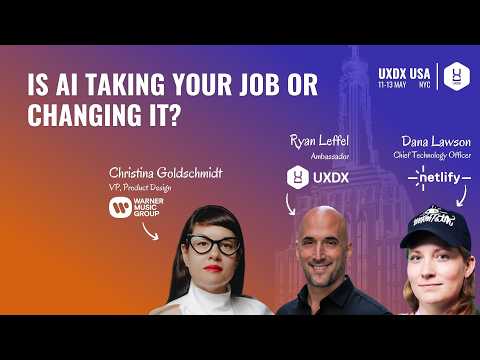
Is AI Taking Your Job or Changing It?
AI is changing product work fast. It can write code, accelerate research, support design decisions and remove hours of repetitive work. But is it taking your job, or changing it? In this debate, Dana Lawson and Christina Goldschmidt take opposing sides on one of the most urgent questions facing modern teams. One side argues that AI is reducing the need for specialists by collapsing roles, raising expectations and putting more pressure on fewer individuals. The other argues that AI is changing the job, not replacing it, freeing skilled practitioners to focus on judgement, systems thinking, strategy, creativity, and the decisions that matter most. Moderated by Ryan Leffel, this session explores what happens as AI reshapes not just coding, but also design, research, delivery, and product decision-making. What does that mean for the future of cross-functional teams? Will experienced product managers, designers, and engineers become more valuable, or will the pressure on individuals become unsustainable? And if AI takes on more of the work across the product lifecycle, who stays accountable for what gets built, why it gets built, and whether it should exist at all?


SOLD OUT: Who Should Be Nervous in the Age of AI? Opening Night Offsite
Join us for an informal opening evening hosted at Figma’s office, just a short distance from the main venue. This offsite session is designed for those arriving early, based locally, or looking for a more relaxed way to kick things off before the main event begins. Expect drinks, conversation, and a provocative discussion to set the tone for the days ahead. Note We cannot accommodate everyone from the event so only available to those who register in advance. We have been here before. We have lived through waves of euphoria and dismay. First the computer. Then the web. Then mobile. Each time we believed everything was changing. Each time shallow practice was exposed. Now AI is not coming. It is here. It drafts. It prototypes. It codes. It researches. It collapses handoffs. It accelerates output. It also accelerates mediocrity. So who should be nervous? This opening session revisits the role of the whole product team in an AI world, not from hype, but from history and fundamentals. It argues that this is not the end of design, product, or engineering. But it is the end of surface-level competence. Drawing from past technology shifts and a return to hands-on learning in AI, machine learning and data science, this session explores and debates what actually survives disruption. Agenda: - 5:30 PM Registration opens; reception F&B open - 6:15 PM Welcome - 7:50 PM Networking and F&B - 8:30 PM Close Our panelists will discuss: - Why every discipline in product development is exposed by AI, not just Design - Why shallow generalism and narrow specialism are both fragile in 2026 - How will team structures and ways of working change - What “depth” really means when AI can generate output instantly - The unique perspective Design brings when systems become intelligent, not just interactive - How to think about generalist vs specialist in a world where AI fills skill gaps but cannot replace judgment - What skills, mindsets and fundamentals will compound rather than decay This will be followed by an open forum, giving everyone in the room a chance to speak candidly with the speakers about their hopes, concerns, and open questions in this space. Location: Figma: 33 W 23 St, New York, NY 10010



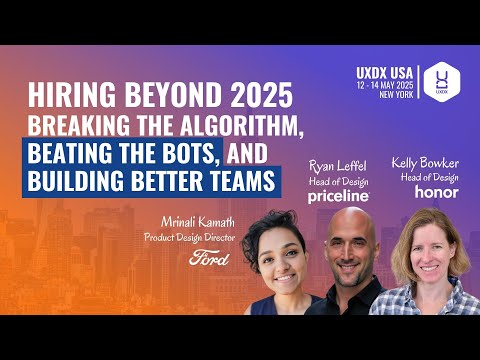
Hiring Beyond 2025: Breaking the Algorithm, Beating the Bots, and Building Better Teams
Hiring today is broken—candidates are getting filtered out by AI before a human even sees their application, and hiring managers are often relying on outdated methods that don’t assess the full potential of a candidate. This discussion will tackle hiring challenges from both sides of the table: - How candidates can stand out despite AI screening and generic recruitment pipelines. - Why skills, mindset, and cultural fit matter more than portfolios or take-home assignments—and how hiring managers can assess them effectively. - How hiring managers can better brief recruiters to identify the right talent, even if they aren’t design or product experts. - How teams are using AI and hiring tech effectively without missing top candidates or introducing bias. - Real-world hiring strategies to improve hiring outcomes for both job seekers and hiring managers.


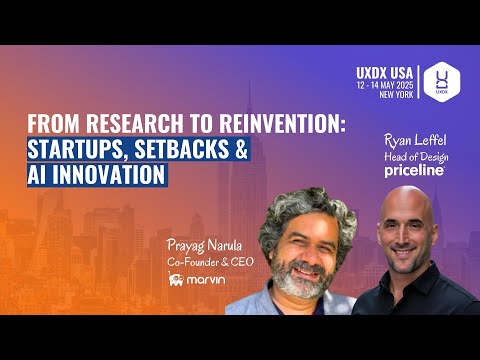
From Research to Reinvention: Prayag Narula on Startups, Setbacks & AI Innovation
What happens when a founder faces a pivotal moment of change? In this live podcast recording of That Pivotal Moment of Change, host Ryan Leffel sits down with Prayag Narula to explore his journey from starting out as a researcher to founding LeadGenius, a Y Combinator-backed startup, and ultimately launching the UX research platform Marvin. They’ll discuss the career-defining choices, challenges faced, setbacks, and pivotal moments that shaped his entrepreneurial path. Plus, they’ll dive into the transformative role of AI in research and what’s next in this rapidly advancing space. Whether you're an entrepreneur, product leader, or AI enthusiast, this conversation will be packed with actionable insights and inspiration you won’t want to miss!







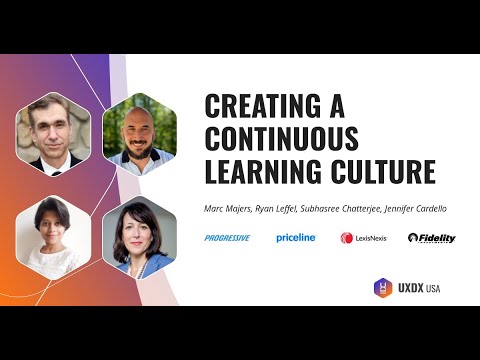
Creating a Continuous Learning Culture
In order to bring tangible value to the user, regular insights must be delivered to internal teams that enable real-time decision-making. But how do you generate segmentation data and insights that clearly translates what the team needs to know about the user? moderated by Jennifer Cardello, VP, Head of UX and Insights for Fidelity Insurance, our panelists will share how to best incorporate customer insights into the decision-making processes to continually measure and learn how actions impact customer behaviour and how they’ve embedded customer insights into their team to create a continuous learning culture.


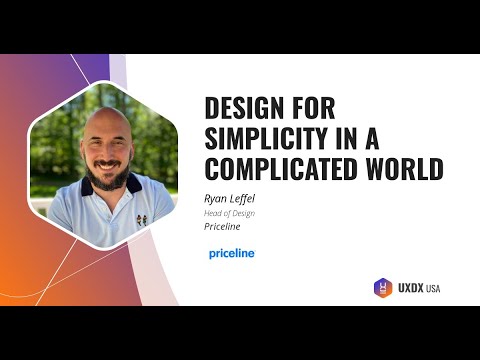
Design for Simplicity in a Complicated World
Design is more complicated today than ever. The truth is, this is only the beginning. From an array of screen sizes, numerous channels, and choice overload, we have a lot to think about, all while considering a consumer mindset that expects simplicity on demand. In this talk, Ryan will uncover how his team at Priceline has needed to uncover insights from their users to be able to shift their approaches when designing their products to ensure winning experiences. He will touch on: - What current design trends are we seeing and what are the challenges associated with them? - How do you gather your data and insights from your users and what is the best way to prioritise these insights? - How do you test your designs? - What advice Ryan has for product designers/product teams to look out for when designing products? - What he sees in the future for product design?