Pamela Mead
Pamela Mead — SVP Global Design at SumUp. Talks and sessions delivered at UXDX.

SVP Global Design

Pamela joined SumUp in fall 2019 to head up Design – Product, Brand and User Research – with global responsibility. Since joining she has started building user research as a foundational practice for all product, marketing and design work; and laying the narrative for SumUp’s UX strategy.
Pamela has spent the last 15 years building design teams and practices in companies as diverse as Delivery Hero, HERE Technologies, Telefonica, and Yahoo!. Her work has always focused on working with emerging technologies to create meaningful products and services that have a positive impact on people’s lives. She is a passionate leader who empowers teams to finding ways to solve the right problems in ways that delight through their simplicity, effectiveness and integrity
As a design executive, Pamela has brought customer focus to innovation and agile product development practices, working in areas that include connected cars, urban mobility, video and communication services, financial services, and health care. She is currently exploring the intersection between design, research and data. She believes it is essential that designers participate deeply in building new practices that incorporate design ethics, as well as social and cultural implications in anticipating the future(s) we are creating.
Past talks
10 talks · 7 events


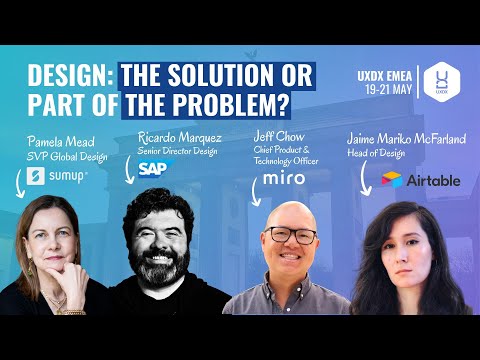
Design: The Solution or Part of the Problem?
- Explore the tensions between speed, quality, and cross-functional collaboration - Hear real-world examples where design enabled, or hindered, business outcomes - Learn how leaders are adjusting team structures and rituals to keep pace with change - Walk away with practical tactics for aligning design more closely with product and engineering



Design is Not Dead - But the Narrative Might Be
Design has gone from savior to suspect in many organisations, and now AI is accelerating the shift again. This talk will reflect on how the story of design needs to evolve, what practices are still relevant, and how to lead when the old narratives no longer apply. - Identify which parts of design’s traditional playbook are still useful, and which to leave behind - Learn how to lead design teams through time, uncertainty and shifting expectations - Understand the impact of AI on product and design roles beyond the buzz - Gain strategies for staying relevant when stakeholders think they’ve “seen it all before”


Building an Organization Structure that works for you
Conways law states that organizations produce software that matches the organizational structure. Therefore the structure chosen affects an organization's success in carrying out its strategy and objectives to achieve maximum performance. In this session, Pamela will discuss what the leadership at SumUp looks for when planning around the organizational structure, and how the thinking and approach have evolved in the last 3 years: \- The impact of an organizations stage of development and organizational philosophy \- Moving from product-centric to customer-centric: the Evolution of SumUp from when I joined to what it is becoming today \- Org details that can make a difference in creating cohesive impact: Brand at SumUp
Culture and Process - Why One Without The Other Is Obsolete
Friction can occur even when teams have the same intended outcome. How do you make change happen when a project seems to be tied down with weights in terms of pushing forward and the obstacles as big as everest. This panel will provide a candid discussion with peers who will share what has worked for them for building great culture and process and why the two together are key to progress.






Aligning Product & Business Objectives
Distinguishing product objectives from business objectives is crucial in making sure your product delivers for your end users. - How do you keep your product objectives aligned with ever changing business needs? - How do you ensure that your product teams don't have their hands tied? Moderated by Snjezana Momic, join the conversation, share your insights and probe the speakers on the elements of their talks that left you wanting more.


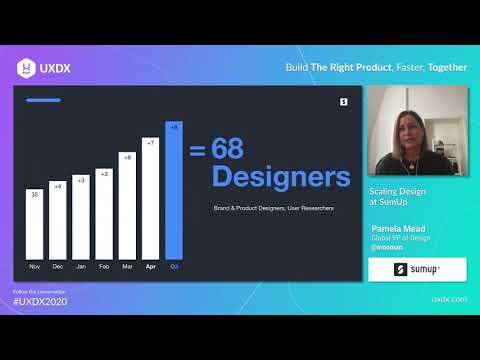
Scaling Design at SumUp
As companies grow in scale with distributed teams around the world it is important to have embedded designers and researchers in your organisation. Keeping momentum, alignment and customer focus to maximise business outcomes requires scaling practices, frameworks and community. Join Pamela as she shares her journey in leading the scaling of design within SumUp.