Rory Madden
Rory Madden — Founder at UXDX. Talks and sessions delivered at UXDX.

Founder

I hate "It depends"! Organisations are complex but I believe that if you resort to it depends it means that you haven't explained it properly or you don't understand it. Having run UXDX for over 6 years I am using the knowledge from hundreds of case studies to create the UXDX model - an opinionated, principle-driven model that will help organisations change their ways of working without "It depends".
Past talks
47 talks · 17 eventsThe Unblocker Awards
This year in Berlin, we will be announcing the winners of The Unblockers, three awards built to recognise cross functional teams who can show a clear chain from evidence to decision to impact. This is not a popularity contest, and it is not about glossy decks or “best process” theatre. It is about practical case studies that other teams can learn from, grounded in what actually changed and what it moved. Award categories - Impact Award: Evidence that led to real outcomes (adoption, retention, conversion) - Best Use of AI Award: AI that changed how you work or what you built - The Unblocker Award: Removing barriers so cross functional teams move faster Winners will be announced live in the final session.

Who Should Be the Most Nervous? Product Managers, Designers or Engineers?
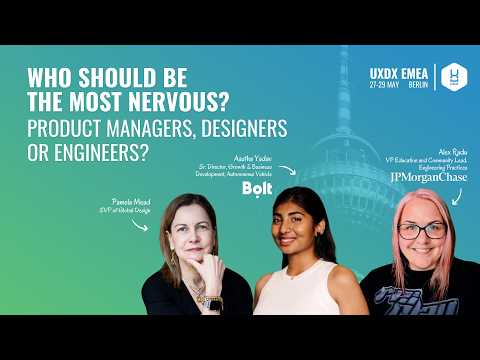
AI isn’t coming. It’s already reshaping how products are built. It writes code, generates designs, synthesises research, and compresses workflows that used to span teams and weeks into minutes. It removes friction—and with it, many of the traditional boundaries between roles. But it doesn’t just accelerate output. It exposes it. When execution becomes abundant, the bottleneck shifts. From building → to deciding what’s worth building. From producing artefacts → to exercising judgment. From process → to understanding. This is not the end of product, design, or engineering. But it is the end of operating at the surface. In this session, we’ll examine what actually changes when AI becomes embedded in the way we work—not from a hype perspective, but from the realities teams are already facing. We’ll explore how roles evolve when tools can do the work, where depth still matters, and what differentiates teams that get better with AI from those that simply move faster. - Why AI exposes every discipline in product development - Why both shallow generalists and narrow specialists are increasingly vulnerable - How team structures shift when handoffs disappear and individuals can execute across domains - What “depth” really means when output is cheap and instant - How to rethink generalist vs specialist when AI fills capability gaps but not judgment - Which skills, mental models, and fundamentals compound, and which decay


Teaming: How Cross-Functional Teams Work in Practice
How do modern product teams actually work together day-to-day? This interactive session explores how collaboration is evolving across product, design, research, and engineering, with a short introduction to concepts like teaming and mobbing before opening the conversation to the audience. Together, we’ll unpack real practices, trade-offs, and patterns shaping cross-functional product development today.

If AI Can Build Products, What Are The Humans For?
For years, we built product teams around a simple assumption: building software was expensive, slow, and required deep specialisation. We decomposed the work across functions; product managers to define value, designers to shape experiences, engineers to deliver solutions, QA to catch issues, and project managers to hold it all together. That model made sense when execution was the bottleneck. But AI has fundamentally changed the cost of building. Today, AI can design interfaces, generate code, write tests, support deployment, and even help shape architecture. Shipping something has never been faster. The challenge is that it’s also never been easier to ship something confidently wrong. The bottleneck is no longer just building the product right. It’s building the right product. In this talk, Rory Madden explores what AI can, and can’t, do across the software delivery lifecycle, where human judgment still creates the most value, and how product teams must evolve as roles begin to merge and coordination becomes the new constraint.
Engineering Architecture for Non Devs: Knowing How to Prompt AI
AI can now generate most of the code in a product, but speed comes with a risk: messy architecture, security gaps, and technical debt that makes teams slower over time. In this workshop, Rory breaks down the architecture basics every non developer needs when building with AI. You will learn how to think about modularisation, security and scale so that prompt built apps do not turn into brittle, non maintainable systems. As designers and developers converge and single builders can ship full products, knowing what to protect, how to structure work, and where debt hides has become a core leadership skill. By the end of the workshop, you will be able to: - Spot the most common architecture mistakes in AI generated products before they become expensive to fix - Apply simple modularisation patterns that keep features decoupled and easier to change - Define baseline security checks and guardrails for prompt to production workflows - Ask better technical questions and review AI output with more confidence, even if you do not code - Create a lightweight architecture checklist to keep fast shipping scalable over time
Engineering Architecture for Non Devs: Knowing How to Prompt AI
AI can now generate most of the code in a product, but speed comes with a risk: messy architecture, security gaps, and technical debt that makes teams slower over time. In this workshop, Rory breaks down the architecture basics every non developer needs when building with AI. You will learn how to think about modularisation, security and scale so that prompt built apps do not turn into brittle, non maintainable systems. As designers and developers converge and single builders can ship full products, knowing what to protect, how to structure work, and where debt hides has become a core leadership skill. By the end of the workshop, you will be able to: - Spot the most common architecture mistakes in AI generated products before they become expensive to fix - Apply simple modularisation patterns that keep features decoupled and easier to change - Define baseline security checks and guardrails for prompt to production workflows - Ask better technical questions and review AI output with more confidence, even if you do not code - Create a lightweight architecture checklist to keep fast shipping scalable over time
Way of Working in Empowered Teams
Cross-functional teams are different to teams of functions. On the outside they look the same but how they work is completely different. Empowered teams own a part of a product from idea to satisfied customers. This means they need to do continuous research, continuous design and continuous development. But what about their practices and processes. In this workshop we will cover: 1. How teams gain the context needed to make decisions 2. The new team Kanban 3. From push to pull systems 4. Pairing and Teaming practices 5. Upskilling, when isolated from functions 6. Aligning with other teams around the org Join if you want to know not just how empowered teams should work but also learn why (and be able to back up your suggestions).
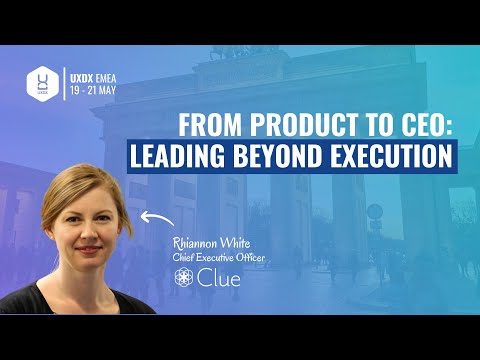
From Product to CEO: Leading Beyond Execution
As product leaders transition into executive roles, the shift isn’t just about strategy—it’s about redefining influence, decision-making, and impact at scale. Join Rhiannon White, CEO of Clue and former CPO, as she shares her journey from leading product to running the entire organization. In this fireside chat, Rhiannon will explore how her perspective on product, leadership, and business outcomes has evolved, the unexpected challenges of stepping into the CEO role, and how product thinking shapes her approach to company-wide decision-making. Whether you're a senior product leader eyeing the next step or curious about how product experience translates to broader leadership, this session will provide candid insights into navigating this career transition successfully.

Everyone's onboard. So why isn't change happening?
Have you spent week's pulling together the data to make a compelling case for changing your processes or adopting a new way of working. Your manager congratulates you on doing a great job and everyone is on board. But then nothing happens. It's clear that we will make more money or save more costs if we go for it but there are always competing priorities and deadlines that seem to trump your change. We'll talk through why this is happening, and what you can do about it.
Founder-Led Product Thinking: Building Ventures, Not Just Features
This session explores how adopting a Founder-Led Product Thinking approach helps teams validate ideas, align early sales efforts with product strategy, and create scalable ventures. Key Discussion Points: - How to integrate validation, market signals, and scalability into product decisions. - What it means to approach product development with a venture-building mindset. - How to navigate stakeholder buy-in, early sales efforts, and funding conversations even inside an established company. - Shifting from an execution role to making strategic, business-impacting decisions.

Everyone's Onboard. So Why Isn't Change Happening?
Have you spent week's pulling together the data to make a compelling case for changing your processes or adopting a new way of working. Your manager congratulates you on doing a great job and everyone is on board. But then nothing happens. It's clear that we will make more money or save more costs if we go for it but there are always competing priorities and deadlines that seem to trump your change. We'll talk through why this is happening, and what you can do about it.
Full Day Masterclass: Ways of Working - Empowering Product Teams
The world is full of bad software - and our processes are to blame. Researchers research, designers design and developers code. We treat each separately as if we can know how customers will react to our products. But to build great products we need to work in really small batches and iterate based on what we learn. The siloed nature of many organisations makes this way of working very hard. In this workshop we will go over why we work in our current siloed ways, why it was the most efficient way to do things last century, why it no longer is the best way to work and how we can shift to a new way of working. This workshop goes beyond just saying things like "work agile together" to dig into the changes required to team structures, planning, funding, governance and more. You’ll walk away from this workshop with a higher level understanding of the complex challenges facing people at different levels of an organisation and how to improve your processes in a way that works for everyone.
Full Day Masterclass: Empowering Product Teams
The world is full of bad software - and our processes are to blame. Researchers research, designers design and developers code. We treat each separately as if we can know how customers will react to our products. But to build great products we need to work in really small batches and iterate based on what we learn. The siloed nature of many organisations makes this way of working very hard. In this workshop we will go over why we work in our current siloed ways, why it was the most efficient way to do things last century, why it no longer is the best way to work and how we can shift to a new way of working. This workshop goes beyond just saying things like "work agile together" to dig into the changes required to team structures, planning, funding, governance and more. You’ll walk away from this workshop with a higher level understanding of the complex challenges facing people at different levels of an organisation and how to improve your processes in a way that works for everyone.
Everyone's onboard. So why isn't change happening?
Have you spent week's pulling together the data to make a compelling case for changing your processes or adopting a new way of working. Your manager congratulates you on doing a great job and everyone is on board. But then nothing happens. It's clear that we will make more money or save more costs if we go for it but there are always competing priorities and deadlines that seem to trump your change. We'll talk through why this is happening, and what you can do about it.
We're agile. So why haven't outcomes improved?
A 2020 study found that only 13% of projects delivered the expected benefits within the expected costs. Luckily we're all agile now so our effectiveness rates are much higher... right? (Spoiler - they are not). In this talk, Rory will explain why fake agile, or water-scrum-fall is more common than real agility and, more importantly, how you can make it easier for senior leaders in companies to make the necessary changes to enable real agility.
Ways of Working - Empowering Product Teams
[Full Day Workshop] The world is full of bad software - and our processes are to blame. Researchers research, designers design and developers code. We treat each separately as if we can know how customers will react to our products. But to build great products we need to work in really small batches and iterate based on what we learn. The siloed nature of many organisations makes this way of working very hard. In this workshop we will go over why we work in our current siloed ways, why it was the most efficient way to do things last century, why it no longer is the best way to work and how we can shift to a new way of working. This workshop goes beyond just saying things like "work agile together" to dig into the changes required to team structures, planning, funding, governance and more. You’ll walk away from this workshop with a higher level understanding of the complex challenges facing people at different levels of an organisation and how to improve your processes in a way that works for everyone.
Aligning on a Way of Working Vision
Agreeing on a way of working vision, and the principles that underpin it, helps teams to decide on, and get buy-in for, the best changes to make. In this workshop, we will cover: - The different interpretations of efficiency - The principles behind modern software development - Defining a vision that incorporates those principles - The best way to identify and implement improvements
A Product Development Process from First Principles
Processes are a collection of best practices that fit the context in which we are working. The problem is that contexts change over time but our processes remain embedded. In this workshop we will design a process from scratch based on the context of today. - Most features fail to deliver the expected value - how can we minimise this risk? - Team design impacts processes - how can we design our teams to deliver the processes that we want? - Products grow in complexity over time - how do we avoid slowing down? - Managers need to ensure funds are being spent in the most effective ways - how can we deliver that confidence without reverting to early scope lockdown? You’ll walk away from this workshop with a higher level understanding of the complex challenges facing people at different levels of an organisation and how to improve your processes in a way that works for everyone.
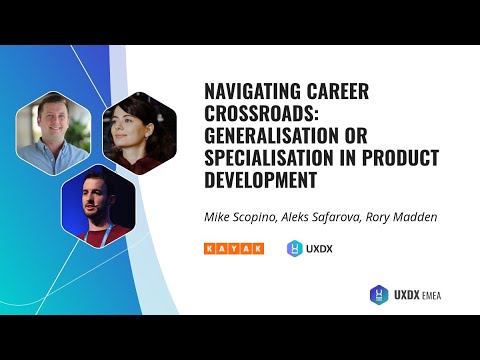
Navigating Career Crossroads: Generalisation or Specialisation in Product Development
We will delve into the age-old debate about whether it is more beneficial to become a generalist, having a broad knowledge base in numerous areas, or a specialist, focusing in-depth on a particular aspect of software development. The debate will be centered around four key questions: 1. Companies need speed - which is more efficient? 2. Which is more effective? 3. Is it easier to become an expert or learn base level in multiple areas? 4. Is it safer for your career to be a generalist versus specialist

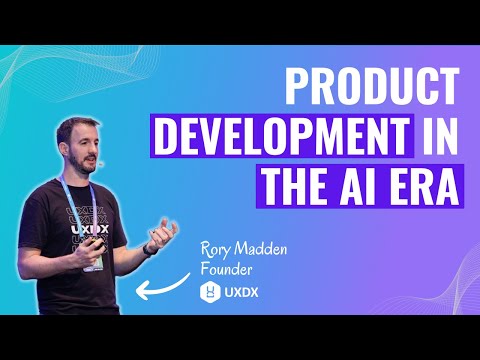
Revolutionising Product Development: The Impact of AI
Join us for an insightful discussion on how AI is transforming the landscape of product development. In this session, the group will discuss the current state of AI in product development, its potential applications, and how it is changing the way businesses innovate. Discover how AI-powered tools are enabling faster and more accurate prototyping, testing, and analysis, and how they are helping companies create more personalized and targeted products. Don't miss out on this opportunity to learn from industry leaders and gain valuable insights on how AI can help take your product development to the next level.
Breaking Down Complex Problems
As the industry moves from large build-it-all Waterfall releases to smaller, more iterative releases the ability to identify the underlying problem that you are trying to solve will be critical to designing simple and evolving solutions that can be tested and verified with your customers. This workshop takes you through essential practical steps.
Aligning on a Way of Working Vision
Agreeing on a Way of Working vision, and the principles that underpin it, helps teams to decide on, and get buy-in for, the best changes to make. In this workshop we will cover: - The different interpretations of efficiency - The principles behind modern software development - Defining a vision that incorporates those principles - The best way to identify and implement improvements
Revolutionizing Product Development: The Impact of AI
Join us for an insightful discussion on how AI is transforming the landscape of product development. In this session, the group will discuss the current state of AI in product development, its potential applications, and how it is changing the way businesses innovate. Discover how AI-powered tools are enabling faster and more accurate prototyping, testing, and analysis, and how they are helping companies create more personalized and targeted products. Don't miss out on this opportunity to learn from industry leaders and gain valuable insights on how AI can help take your product development to the next level.
Centralization vs Decentralization: Finding the Best Service Team Model
Join us for a thought-provoking session that explores the benefits and drawbacks of centralizing service teams versus decentralizing them. The group will discuss how centralization can improve consistency, standardization, and cost-effectiveness, while also exploring the advantages of decentralization, such as faster response times, better customer service, and increased autonomy. Learn how to weigh the pros and cons of each approach and how to make informed decisions that align with your company's goals and culture. Don't miss out on this opportunity to gain valuable insights from other people in the audience and take your team to the next level.
Aligning on a Way of Working Vision
Agreeing on a Way of Working vision, and the principles that underpin it, helps teams to decide on, and get buy-in for, the best changes to make. In this workshop we will cover: - The different interpretations of efficiency - The principles behind modern software development - Defining a vision that incorporates those principles - The best way to identify and implement improvements
Second chance: Breaking Down Complex Problems
As the industry moves from large build-it-all Waterfall releases to smaller, more iterative releases the ability to identify the underlying problem that you are trying to solve will be critical to designing simple and evolving solutions that can be tested and verified with your customers. This workshop takes you through essential practical steps.
Breaking Down Complex Problems
As the industry moves from large build-it-all Waterfall releases to smaller, more iterative releases the ability to identify the underlying problem that you are trying to solve will be critical to designing simple and evolving solutions that can be tested and verified with your customers. This workshop takes you through essential practical steps.
Modern Development Principles
SOLID had a good run. But now some of these points like Don't Repeat Yourself are being seen as an anti-pattern because premature abstractions can cause more problems than repetition. So what are the modern principles that should replace SOLID? And how do they apply to modern software stacks? If you are interested in the craft of software development, join this forum to dig deeper into the modern development environment.
Turning Motivation into Action
We all have great ideas but getting them converted into action. In this talk, Rory will share some methods to transform your way of working.

What Framework Should You Use?
It seems like every day there is a new frontend framework released. But do they solve the problems that teams are facing on a daily basis? Join this debate to learn the pros and cons of hydration, resumability, streaming and more to uncover the benefits and drawbacks of different frameworks and help you decide where to focus next.


All things Process
Process gets a bad name because we think of the restrictive processes that are forced on teams. But processes enable us to take advantage of things others have learned so that we don't have to re-invent the wheel. In this forum, we'll talk through the different methodologies that teams are using, the principles behind them and how people are trying to push their companies forward.
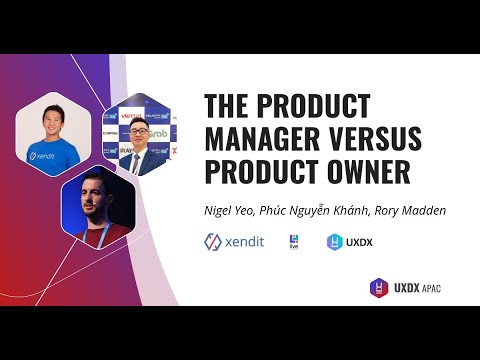
The Role of the Product Manager
Join us for this interactive discussion on the role of a product manager within product teams. Pulling from their experiences the panelists will talk through their learnings, best practices and suggestions on where product managers should sit that have worked for their businesses to ensure great products and happy teams.

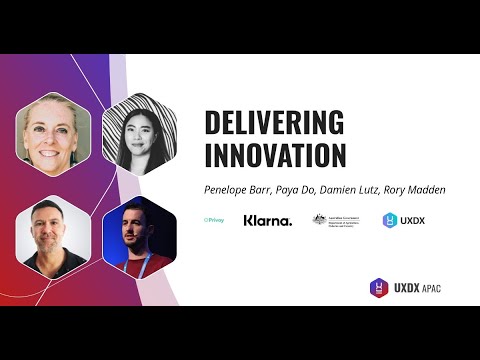
Delivering Innovation
Everyone is searching for innovation but there are many things that can be pushing back against new and experimental ideas. In this panel, we explore the different challenges facing governments, startups and large enterprises and what teams can do to foster innovation in their organisations.


How To Break Down Complex Problems
"Everything is priority 1! It just won't work without everything... We've all been there with demanding stakeholders and a complex product. But the good news is that there is always a way to break down complexity - it just requires a new way of looking at things. In this workshops we will: 1\. Define complex problems and why breaking them down is hard 2\. Cover a framework for breaking down products 3\. Take an example problem from idea to iterations 4\. Focus on the importance of multiple solutions - don't get locked in early"
Aligning on a Way of Working Vision
Do you ever feel like you are going in circles trying to convince management to adopt a new tool or technique? While everyone says they are looking to make things more efficient this means different things to different people. Agreeing on a Way of Working vision, and the principles that underpin it, helps teams to decide on, and get buy-in for, the best changes to make. In this workshop we will cover: - The different interpretations of efficiency - The principles behind modern software development - Defining a vision that incorporates those principles - The best way to identify and implement improvements
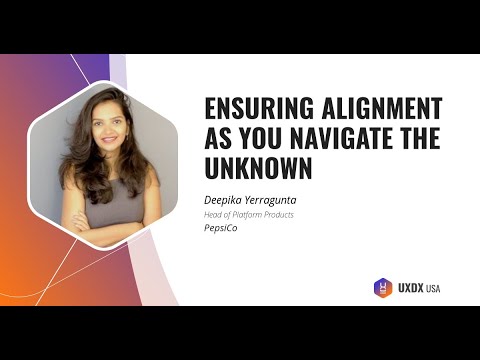
Ensuring Alignment As You Navigate The Unknown
They say change is inevitable; but change during an unprecedented period in history - no one can prepare for that. So as a product leader how can you ensure forward momentum for your organisation and provide alignment at this time? In this talk, Deepika will talk through her learnings as she built a team charged with tackling the shifting requirements of supply chains platforms and eCommerce in this ever changing environment. She talk through her best practices on: - Leading with a tech mindset for traditional business models - The importance of communication; and - How to intentionally create a team that is adaptable to change and process oriented

Prioritization
The reality of building products is that you can never get everything done = priorities shift, resources are reallocated, and funding is scarce. An effective product prioritization process garners support from stakeholders, inspires a vision in your team, and minimizes the risk of working on something that nobody wants. This session is an opportunity to discuss the challenges, successes, and pet peeves you have with prioritization and get to know how other people approach it.
Modern Development Principles
SOLID had a good run. But now some of these points like Don't Repeat Yourself are being seen as an anti-pattern because premature abstractions can cause more problems than repetition. So what are the modern principles that should replace SOLID? And how do they apply to modern software stacks? If you are interested in the craft of software development, join this forum to dig deeper into the modern development principles.
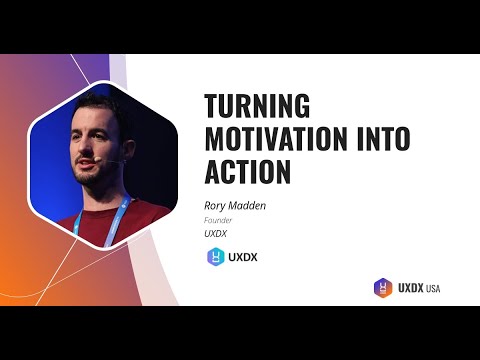
Turning Motivation into Action
We all have great ideas but getting them converted into action I shard. In this talk, Rory will share some methods to transform your way of working.
Aligning on a Way of Working Vision
Do you ever feel like you are going in circles trying to convince management to adopt a new tool or technique? While everyone says they are looking to make things more efficient this means different things to different people. Agreeing on a Way of Working vision, and the principles that underpin it, helps teams to decide on, and get buy-in for, the best changes to make. In this workshop we will cover: - The different interpretations of efficiency - The principles behind modern software development - Defining a vision that incorporates those principles - The best way to identify and implement improvements
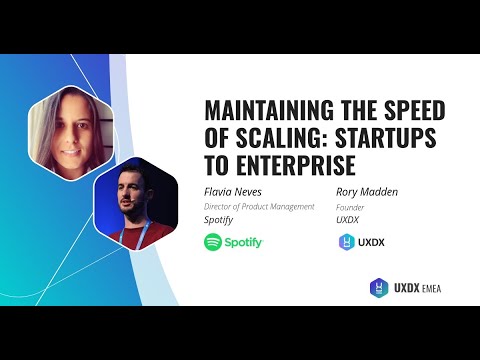
Maintaining The Speed Of Scaling: Startups To Enterprise
As a product leader, it can be tough to navigate working in different team structures, processes or with the constraints of a small (or large) team. This interview will take on key learnings from Flavia on how to balance trade offs of moving like a startup with a lot of weight. How do you create things like goals, communication and build autonomy within a team.

How To Break Down Complex Problems
"Everything is priority 1! It just won't work without everything... We've all been there with demanding stakeholders and a complex product. But the good news is that there is always a way to break down complexity - it just requires a new way of looking at things. In this workshops we will: 1\. Define complex problems and why breaking them down is hard 2\. Cover a framework for breaking down products 3\. Take an example problem from idea to iterations 4\. Focus on the importance of multiple solutions - don't get locked in early"