Agenda
UXDX APAC 2021 agenda — talks, workshops, panels and more from leaders sharing how they deliver better products. New sessions announced every week.
Wed3 Mar


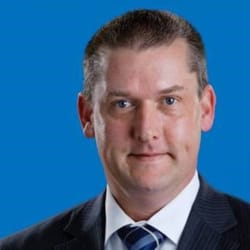
Dan Harper and his teams at Xero just wrapped up big changes within the business. With involvement required from 40+ teams, changes to many critical legacy systems and the need to build several new platforms, they carried massive risks throughout the project and particularly when "going live" to customers.
In this talk, Dan will share the learnings on what worked, what didn't work and the continuous delivery practices they implemented that helped the team reduce risks and incrementally deliver changes to production across global regions and different customer segments.


Successful cross-functional team requires all team members to have equal voices, responsibilities and stake in the direction of the product, including product, engineering and design individuals.
In this talk by Preethi will discuss how changing the mindset of designers to step-up, have interest in the business decisions and deploying their design skills outside the world of design creates stronger and more customer-centered products.
She will touch on:
- How to encourage T-shaped designers in product teams
- Using design thinking in business and product objectives creates better products
- Having a truly cross functional teams allows for more efficient teams



This session of the program is designed to highlight the importance of feedback, in particular the role of leaders in role modelling how to seek and receive feedback in product and design teams.

Culture, oftentimes is the first step in allowing any organisational change within a business.
When Jasper Wu, joined U-Next this was his daunting task; to expand the design culture to include the users experience, journey and translating the insights from the research team. And to create interest within the business, his first step was to involve everyone (even management) in a design sprint.
In this talk, Jasper will talk through how he established his first design sprints in U-Next and how it has created a better understanding of their users, better overall team involvement and became a great tool to break the internal structural hierarchy.
He will explain:
- How he started sprints? Who is involved?
- What has worked and what hasn't?
- How they adapted to remote design sprints?
- Any future plans for improvement


2020 brought us massive growth in usage but big challenges came along with it (as they say, a good problem to have!).
In this talk, I will share the challenges we encountered and how we responded to them, including the decisions we had to make and the processes we developed.


We can't predict the future, but we can build a team that is resilient, ready to take risks and pivots when things get tough. In this talk, Aditi will share her personal stories on how she has prepared her design teams for change, both internal and external and she will provide practical tips that you can incorporate within your own teams.
Dan Harper and his teams at Xero just wrapped up big changes within the business. With involvement required from 40+ teams, changes to many critical legacy systems and the need to build several new platforms, they carried massive risks throughout the project and particularly when "going live" to customers.
In this talk, Dan will share the learnings on what worked, what didn't work and the continuous delivery practices they implemented that helped the team reduce risks and incrementally deliver changes to production across global regions and different customer segments.
Successful cross-functional team requires all team members to have equal voices, responsibilities and stake in the direction of the product, including product, engineering and design individuals.
In this talk by Preethi will discuss how changing the mindset of designers to step-up, have interest in the business decisions and deploying their design skills outside the world of design creates stronger and more customer-centered products.
She will touch on:
- How to encourage T-shaped designers in product teams
- Using design thinking in business and product objectives creates better products
- Having a truly cross functional teams allows for more efficient teams
This session of the program is designed to highlight the importance of feedback, in particular the role of leaders in role modelling how to seek and receive feedback in product and design teams.
Culture, oftentimes is the first step in allowing any organisational change within a business.
When Jasper Wu, joined U-Next this was his daunting task; to expand the design culture to include the users experience, journey and translating the insights from the research team. And to create interest within the business, his first step was to involve everyone (even management) in a design sprint.
In this talk, Jasper will talk through how he established his first design sprints in U-Next and how it has created a better understanding of their users, better overall team involvement and became a great tool to break the internal structural hierarchy.
He will explain:
- How he started sprints? Who is involved?
- What has worked and what hasn't?
- How they adapted to remote design sprints?
- Any future plans for improvement
2020 brought us massive growth in usage but big challenges came along with it (as they say, a good problem to have!).
In this talk, I will share the challenges we encountered and how we responded to them, including the decisions we had to make and the processes we developed.
We can't predict the future, but we can build a team that is resilient, ready to take risks and pivots when things get tough. In this talk, Aditi will share her personal stories on how she has prepared her design teams for change, both internal and external and she will provide practical tips that you can incorporate within your own teams.
Thu4 Mar

Thu4 Mar




Thu4 Mar



Thu4 Mar



Thu4 Mar


Thu4 Mar


Thu4 Mar



Thu4 Mar

Going into a large and historical financial institution, Anthea has had many learnings about the strength and intertwining relationship of research and design when it comes to product development. She has recognised that by using the insights from research teams, designers can gain better understanding of the problems they are looking to solve and work towards helping people in moments that matter.
In this talk, Anthea will share her journey of how she has interpreted the insights from their customers, how it has affected the way she approaches design and overall how it has improved designs for products she has been involved with.
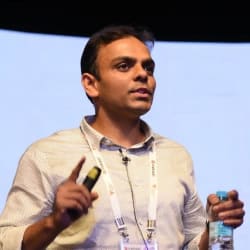

Product development failure is a common learning experience for most teams, but do we always use it to its maximum potential? How can we look at failures more objectively to better future development? At OLX Group, Praful Poddar uses failure to learn if his team are getting smarter and if they're generating an ROI. To fully utilise failure learnings and create next-level user experiences, failure needs to be viewed differently. In this talk, Praful will discuss:
- Problem definition and its close link to failing correctly
- Failing fast with the goal of reducing the cost of failures
- Including failures in your planning process across the product lifecycle to learn better

All of the new processes, frameworks and ways of working that you learn will involve implementing change on your organisation. This is where a lot of good efforts fail.
In this talk I will cover, with examples,
1. The elements required for change
2. The common mistakes people make
3. How to break down a complex problem
4. Techniques to make change happen


Looking to learn how to start a product team in a fast growing start-up?
In this talk Mike will share his step-by-step guide on how he's built a remote Product Team at scale in Brankas. He will talk through his journey through this change and touch on:
- The need for this sudden shift in Brankas
- His step-by-step guide on creating this shift
- How to establish a North Star that becomes a tangible strategy
- What has changed since and any future improvements he foresees
One of the biggest challenges product leaders in any modern organisation face is creating "empowered" teams. It means asking the right questions without pre-supposing the answer, painting a picture without leaving teams with nothing more to do than paint-by-numbers. It means finding the right balance between top-down guidance and bottom-up creativity.
Timo Hilhorst, Head of Product at SEEK, is still very much on this journey but offers up his perspective as well as some examples of when he's seen this work well (and not very well at all).

The difference in perspective, skill set and experiences of Product Managers and UX Designers help us to build better products. The overlap in our roles should bring us together but often tend to divide us. How do we develop empathy and understanding to build stronger, healthier relationships? How do we lean into constructive dialogue and come out with shared understanding and alignment?
Going into a large and historical financial institution, Anthea has had many learnings about the strength and intertwining relationship of research and design when it comes to product development. She has recognised that by using the insights from research teams, designers can gain better understanding of the problems they are looking to solve and work towards helping people in moments that matter.
In this talk, Anthea will share her journey of how she has interpreted the insights from their customers, how it has affected the way she approaches design and overall how it has improved designs for products she has been involved with.
Product development failure is a common learning experience for most teams, but do we always use it to its maximum potential? How can we look at failures more objectively to better future development? At OLX Group, Praful Poddar uses failure to learn if his team are getting smarter and if they're generating an ROI. To fully utilise failure learnings and create next-level user experiences, failure needs to be viewed differently. In this talk, Praful will discuss:
- Problem definition and its close link to failing correctly
- Failing fast with the goal of reducing the cost of failures
- Including failures in your planning process across the product lifecycle to learn better
All of the new processes, frameworks and ways of working that you learn will involve implementing change on your organisation. This is where a lot of good efforts fail.
In this talk I will cover, with examples,
1. The elements required for change
2. The common mistakes people make
3. How to break down a complex problem
4. Techniques to make change happen
Looking to learn how to start a product team in a fast growing start-up?
In this talk Mike will share his step-by-step guide on how he's built a remote Product Team at scale in Brankas. He will talk through his journey through this change and touch on:
- The need for this sudden shift in Brankas
- His step-by-step guide on creating this shift
- How to establish a North Star that becomes a tangible strategy
- What has changed since and any future improvements he foresees
One of the biggest challenges product leaders in any modern organisation face is creating "empowered" teams. It means asking the right questions without pre-supposing the answer, painting a picture without leaving teams with nothing more to do than paint-by-numbers. It means finding the right balance between top-down guidance and bottom-up creativity.
Timo Hilhorst, Head of Product at SEEK, is still very much on this journey but offers up his perspective as well as some examples of when he's seen this work well (and not very well at all).
The difference in perspective, skill set and experiences of Product Managers and UX Designers help us to build better products. The overlap in our roles should bring us together but often tend to divide us. How do we develop empathy and understanding to build stronger, healthier relationships? How do we lean into constructive dialogue and come out with shared understanding and alignment?