Checking session availability…
Hang tight while we load the latest updates.
In the highly regulated, rigorous and mature business of pharmaceuticals, Erin created the first-ever design team to establish a user-centered design culture.
In this session, Erin will talk through the journey of the design team at Charles River Laboratories they rapidly built and released their MVP in conjunction with building their design systems, through:
- Redesigning their internal & client facing platforms and democratising UX;
- The biweekly research over-the-shoulders her team conducts with the overall product team;
- How they team were able to scale this and;
- Any future improvements she foresees.
Streamlining Drug Development Through UX
Erin Howard at UXDX USA. Video: https://www.youtube.com/watch?v=-n50l93s8CQ
Readable transcript: edited from the recording's captions for readability (fillers and false starts removed, punctuation and section headings added). Wording is the speaker's own. Timestamps are positions in the video. Names marked [?] could not be verified against the audio.
Design at Charles River
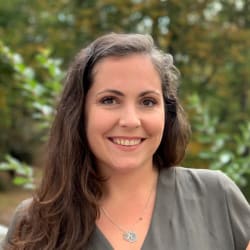
[00:00:00] Hey everyone, it's nice to virtually see you all. Quite cool. I'm excited to be here today. I wanted to say thank you, first of all, to the UXDX team and the organizers for inviting me to talk to you and tell our story of how the Charles River design team is helping to streamline drug development. I'm Erin Howard. I joined Charles River about a year ago, and I lead the product, service and experience design team, focused on our digital transformation. My team and I explore the challenges and opportunities that Charles River faces from a human-centered design thinking point of view, and I'm excited to share our story of growth and the evolution of design at Charles River.
[00:00:40] First let me just tell you a quick note about Charles River. Charles River is an early-stage contract research organization, otherwise known as a CRO. We work with a wide range of clients, but most notably support aspects of the drug development process. Over the past three years we've worked on more than 80 percent of the drugs approved by the FDA, and tested most of the COVID-19 vaccines that have helped us move forward in this global pandemic.
[00:01:07] At Charles River our purpose is clear and our passion is strong: together we create healthier lives. This statement is one by which everyone at Charles River lives and works every day, but "together" is the word that my team is heavily focused on. COVID-19 has accelerated the need for a digital experience for our customers, and it's through our evolution and understanding of our customers that we've been able to bring that to market. A digital strategy is no longer a nice-to-have for Charles River; it's a necessity. And it's through this work, grounded in design thinking, that we will fundamentally change the way our clients interact with us, and the way we interact with each other, across the future of Charles River.
Two women and an MVP
[00:01:48] Who is design at Charles River? Well, when I joined Charles River, design was in its infancy. We've grown tremendously in the past year, and I'd love to take you through some of the ways that UX and design thinking have impacted our business. But first let me take you to the beginning. We started with two women and an MVP. When I joined Charles River at the end of March, a little over a year ago, there was one designer, a fabulous designer named Nikki, working on our very first customer-facing product. The delivery team was moving fast towards our first MVP, and our first product release was set for June, just two months after I started. We had a huge backlog of work already stacked up for a design team that didn't even exist.
[00:02:34] What did I do? Well, first I went and hired four awesome designers straight away. We got to work, and across those first few months we were definitely just treading water, barely keeping our heads above it and juggling a lot. I looked back on this phase, and I wanted to articulate where we began through this common methodology of the stages of UX maturity. Nielsen Norman put this out; I'm sure many of you are familiar with it.
[00:02:59] When I joined a little over a year ago, I believe that Charles River was somewhere between a one and a two, absent and limited. We were new, we were undiscovered, and potentially a little bit towards aspirational. But because I'm a bit of a researcher and a UX person, I wanted to make sure that I was pressure testing my own assumptions, so I asked my team. They mostly agreed; they put us roughly in the same place. A few people started a little bit later, a few people started around when I did, which puts our range roughly in that same one to two, slightly above two, positioning.
[00:03:37] In many ways this was a great place to start. All in all, evidently, we were brand new. The design capacity didn't exist at Charles River before 2021[?], and of course we were absent or limited. But I truly believe, if we hone in on it, that we were undiscovered, we were aspirational, and we were foundational to the beginning of this transformation. Charles River is a 75-year-old company that never had design thinking as part of its wheelhouse. I would have been shocked if we'd shown up anywhere else on this scale.
How we work and our method
[00:04:08] Across this first year we grew, we continued to push our overall maturity, and we began to put a few basics in place. We defined how we work. We work together as a cross-functional team to achieve the desired outcome. We work in a quick and iterative process. We are collaborative, and we have joint accountability. We were working this way across last year, but we finally put pen to paper on this towards the end of the year and really defined how we work. We use this as part of the kickoff of any new project that comes our way, and it helps hold everybody accountable to how we want to achieve. We have SMEs, engineering and scrum masters across this cross-functional team, and we hold everyone to the same how-we-work standards.
[00:04:52] We also defined our methodology. Our method is rooted in design thinking, as many methods are, but it goes a little bit beyond that. We include the mobilize and delivery phases as part of our overall method, because we don't believe design just ends at: oh hey, we've created a concept and now we're ready to deliver on it. We move through these phases fairly quickly. We can do the understand phase in anywhere from two to four weeks, and sometimes we do it in two to four days if it's a tiny little feature. We move through them methodically, and we have checkpoints along the way that help us ensure that we're following our own method.
[00:05:27] This leads us to: we MVP everything. We start at the basics, we start at the bottom. But one of the pieces of the MVP sweet spot, if you will, that really hones in for us is the concept of understanding and thinking about what will truly drive customer impact. We double-click on that. We are in that every day, all day. We are customer-obsessed.
Customer obsession
[00:05:54] At Charles River, customer obsession means many things, but for our team it really means involving the customer in the whole life cycle of the creation process. We include customers in feature prioritization: we ask them to rank and card-sort our features based on their desirability. We invite them to co-create with us: we ask them to design what they see and envision their future, so that we can really prioritize and understand their needs. The co-creation has a fantastic follow-on effect, because it actually eases their adoption and their onboarding, since they actually helped us design the product.
[00:06:30] We test to death. We test at low, mid and high fidelity any time we can. Customer feedback is imperative; the fidelity is not. We include customers in ideation, and divergent thinking really helps them get a chance to step out of their day-to-day, explore a little bit of their own design thinking, and maybe even bring some of it back to their organization.
[00:06:53] And most amazingly, we do most of this through established bi-weekly sessions with customers. Every two weeks, the designers, in partnership with their product owners and their delivery teams, sit down with three to five customers and do some sort of session with them, whether that's an ideation, a prioritization, a test or a co-creation. They define what they need from that sprint, they use that time effectively, and that helps to infuse the customer need back into the product backlog and helps make strategic decisions about where features will go in the future.
[00:07:32] I'd love to show you a quick example. As you can see, this has been anonymized, and obviously we don't have blue happy faces, but this is an example of a team member of mine talking directly to a customer through Microsoft Teams, where we're showing them a prototype. Now, this doesn't look like your traditional prototype. This is made in Power BI. We've abandoned making design prototypes in Sketch or Figma for data artifacts, because it's too hard to maintain. We couldn't work on the fly; we couldn't do the data pulls that the customers were asking us to do. So we worked with a fabulous data team and we built a Power BI prototype.
[00:08:10] We work at this very low fidelity level to help understand how customers read this data, how they interact with it, what kinds of trends they are trying to see, and what helps them make decisions. This has been really critical for us in pushing our data product, but it's also been an opportunity for us to learn a little bit more about the science. By talking to them without the visuals of the high-fidelity mockup, we've been able to really root ourselves in understanding the foundational aspects of the data.
[00:08:39] For the most part, customers love these sessions. They feel committed to the product. They're helping us learn, they're learning from us, and as a design team and a set of designers we've really been able to engage in the science and learn more about what our customers are trying to figure out about drug discovery. It's been powerful. The designers come out of these sessions feeling empowered that they can really focus on the customer needs and bring that to their product owners as part of their backlog and iteration planning discussions. It helps them make decisions quicker, really continues to refine our process, and ultimately helps us fulfill our mission of together creating healthier lives.
[00:09:19] We held a lot of these last year. Last year we did 115 of these in a short period of time. So far this year we're tracking about 75, about 15 a month. We've also turned this discovery to focus internally. We help team members across the organization whose customers are not external but internal to understand their needs, working with the likes of HR and the service desk, to enable them to truly understand who they are solving for. We've made multiple personas across the organization that have helped businesses make critical decisions about strategy, who they're solving for, and where they might need to go.
[00:09:59] A few years ago, customer discovery at Charles River would not have looked like this. It would have been a very different way of working. We've really brought this idea and shift into the organization, of how important it truly is to understand the pain points and the value of our customers, and it's been a transformation in their understanding of what design can bring to the conversation.
A year later on the maturity scale
[00:10:22] But we're not quite done yet. What happened next? Well, we hired five more designers. We expanded our scope, and we already rebranded ourselves. We started out as the UX/UI team; we are now the product, service and experience design team. We released two products last year, we have three to release this year, and we've really established design as a foundational discipline at Charles River.
[00:10:46] Not bad growth for a year. But where are we on that maturity scale? We started out somewhere, and I can confidently say we are squarely at four. Again I did pressure test, and they all agreed that we're squarely at four. We have some growth to go, but I think that's pretty good in a year. What we've found is that our movement through this maturity scale has been overwhelmingly positive. That comes, obviously, from the foundation of not having existed before, but we have really strong support from strategic leadership and other parts of the organization that has made this move feel almost effortless. It's been from undiscovered to aspirational to foundational and promising, to now partly systemic, which is a huge shift in the culture. We're super excited to get to integrated and fully user-driven, and I have every confidence that we can get there in the next few years.
Where we are going and what we learned
[00:11:42] What does that look like? Where are we going? Well, we're going to maybe take over the world of Charles River. Just kidding. But we are still hiring. We've learned a few things that we want to continue to work on. We learned that the life sciences industry comes with an incredible uphill climb of knowledge gathering, and an overwhelming feeling if you've not worked in it before. It feels like you're drinking from a fire hose when you first start. So we're starting to adjust our onboarding and change the way we bring designers into the organization, so that they can learn from our mistakes and our experiences in the previous onboarding.
[00:12:17] We've learned that design needs to run even further ahead of product delivery than we'd planned. We have customer obsession, customer discovery and user research at the start of every project. We're bringing that into other parts of the organization where they haven't even thought about it, stuff like Salesforce and HR, and we're excited to continue that expansion.
[00:12:42] We learned that we needed to design, create and build a design system alongside our MVP. It was a critical aspect of our ability to scale, so we hired a designer for that, and we have a designer working with a small group of engineers to build our first design system in partnership with our customer-facing product team.
[00:12:59] We also learned that customer obsession is not just a mindset for our team, but a mindset that the whole organization is ripe to adopt. We've begun evangelizing, teaching and growing design thinking skills well beyond the design team, and have brought design thinking into business strategy sessions, marketing strategy conversations, HR and human resources processes, and many other focus areas across Charles River. We learned that we've set a great foundation, and we have an awesome future for design at Charles River, and we are excited to be on this ride. Thank you.
Speaker

More like this?
Mon, May 23, 1:00 PM UTC
Redesigning a Platform Experience at Scale