Checking session availability…
Hang tight while we load the latest updates.
LinkedIn has both centralized and embedded research teams, but it wasn’t always that way. Over the last 10 years, the team grew from 2 to 50 researchers. With that growth, LinkedIn UXR used organizational design to respond to strategic needs of both the Product & Engineering org and the UXR team, at several different inflection points.
Today, Kassie leads a centralized, horizontal UXR Practice team and Marieke joined last year and leads an embedded research team on one of LinkedIn’s business units. Marieke and Kassie will share their perspectives on why LinkedIn UXR chose a hybrid embedded and centralized org design, what’s working and not, what impact looks like in each, and how they see the structure of the organization evolving over time.
Organizational Design at LinkedIn
Marieke McCloskey, Kassie Chaney at UXDX USA. Video: https://www.youtube.com/watch?v=4v__huzz_dQ
Readable transcript: edited from the recording's captions for readability (fillers and false starts removed, punctuation and section headings added). Wording is the speaker's own. Timestamps are positions in the video. Names marked [?] could not be verified against the audio.
How the LinkedIn research team grew
[00:00:00] Marieke: Hi everyone, my name is Marieke. Thanks for joining us today. This is going to be a little bit different from other talks this week: rather than give you a presentation, Kassie and I are just going to have a conversation. There are so many ways to structure a research team to respond to the strategic needs of both the R&D org and the UX research team. We didn't feel like telling you what to do, but rather sharing a conversation about where we ended up and why.
[00:00:25] Kassie and I are both research leaders at LinkedIn. Kassie leads a centralized, horizontal UX research practice team, and I lead an embedded research team in one of our business units. We're going to share a little bit about how we got here, how we work together, some of the benefits of this setup, and also some of the challenges, or opportunities of course. If you're like me, you love hearing how UX research teams are organized and how they came to be. Kassie, you've been on the research team at LinkedIn for almost seven years, and at LinkedIn for even longer. I'd love to know what it was like when you joined and how it's grown since.
[00:01:02] Kassie: Thanks, Marieke. When I joined LinkedIn, it was actually nine years ago, I started as a market researcher on the team, and we sat really close to the user research team; we literally physically sat with them. There were three market researchers and four user researchers for all of LinkedIn at that time. I felt such kindred spirits. When you're researchers, you just gravitate to and find other researchers; that's just what we do. Really complementary skill sets and methods, but mostly a really shared perspective on how we can create meaningful insights that create actionability for our product partners. That's the name of the game.
[00:01:40] When there was an opportunity, as the user research team started to grow, I was really fortunate that an opportunity opened up to join the team as a manager, and I moved across to the product organization, managing eight separate enterprise product areas with three people. If you do the math on that, you'll understand that's not possible. At that time I was again fortunate that, like most of LinkedIn, we went through this hypergrowth moment, so we didn't stay there for very long.
[00:02:15] Part of the game in building a team has always been scale and leverage. The idea of scale and leverage is a constant repeat in my mind. At that time it was going from zero to one, from not much of anything to a lean something, if you will. Fast forward, and we now have a team of about 50, which is incredible to me. I worked, as you mentioned, for about five and a half, six years on specific product areas, but always, as part of that role, there was the need to continue to scale and leverage, so I've always had a side gig working on other things that are in service of the whole team, not just my particular product area.
[00:02:55] That's really instilled in me the need to create more thoughtfulness around what it takes to create more sophisticated processes and tools, to support that growing team, to continue to invest in our culture and our team and their development. I have the opportunity now to move into a role where I sit horizontally and I get to have that as my full-time job, not just one of my side jobs, which I'm really excited to take on. Marieke, it's funny, we've known each other a long time, but you just joined LinkedIn about a year ago, which is incredible in and of itself. Given your background, why did you come to LinkedIn?
The centralized partnership model
[00:03:38] Marieke: I joined because of the problem space that I get to solve at LinkedIn, and, maybe not surprisingly given this talk, specifically this team structure. Today we have a centralized partnership model. Yes, we're a central UX research team, as UX research has always been structured at LinkedIn, within the design org, but we have three teams aligned with different business units, and then a horizontal practice team. I have a dedicated design and product partner, and we get to go deep on our product space.
[00:04:08] I lead our Talent Solutions research team, so think about the work side of LinkedIn: getting a job, learning on the job, but also hiring. That has changed so much in the last two years. It's a really, really interesting space to do research in, and to think about how our product can help people find the right next job for them. I love that area, and I was excited to get to dig into that product space. But I was specifically looking for a role like this, where I could have the autonomy to build my research team and work with my research team, leverage them to do awesome work, but have the thought leadership and partnership from other research leaders to really think about what that means for our function, and to not have to do it alone. This structure is novel. I have not come across it in my job search or in my career. I'd love to hear more about how the practice team came to be and what you hope to accomplish with it.
Why a practice team: late-stage research, inclusive research, training
[00:05:09] Kassie: As I mentioned, I'd done a lot of things on the side as you build a team, but always feeling like, "Oh, that could be a whole thing, but you're just going to do part of the thing." It's that feeling of giving it short shrift, and I'll be honest, being frustrated by that and going, "This deserves more. It deserves more attention and focus." When we were a team of 10 or 12, that was not even a thought, not even a whisper. It's very reactive and in the moment: what's the tool we need, what's the process that we need, who are the people that we need, and you just go and do it. But looking ahead and going, okay, that doesn't work so well when you're a team of 50, potentially a team of 70 to 100 in the next two to five years, which is incredible to me, and thinking about how we change the game.
[00:06:03] I had started doing this within my own product team. I started looking at different ways to organize ourselves, again just leveraging scale, leverage and scale every single day. How could we change our work style, our organization models, think about differentiated types of work within the team for the researchers on the team? I pitched this idea when we went through some organizational change anyway. It felt like a really timely moment to go, "If we're going to do this big org change, hey, here's a crazy idea." I'm really grateful that our design leadership saw the vision that I proposed: let's pull together some stuff that a best-in-class, world-class research team needs to have foundationally.
[00:06:51] How can we focus on late-stage research programs? I know we'll talk in a minute about the role of the embedded team, but I had already started to see that, like many embedded teams, we want research to be positioned as strategic partners working out in front, and yet the business demands, and the expectation is, that we're still shipping quality products. How do we do a little bit of both? How can we unblock the embedded teams to make that possible, to make the deep strategic work possible?
[00:07:22] As part of our growing practice, we've always had threads of inclusive research, but actually centralizing a tenet around inclusive research: what does it mean to center historically marginalized people in our research, making sure we're being thoughtful about vulnerable populations, how they're treated within a research experience and how they're represented within our insights to our partners. That was really, really important to us, and so thinking about that more holistically, rather than sitting it somewhere in a specific business line, just made sense.
[00:07:53] And then finally, if you think about just the team and talent, there was that opportunity to think about the learning and development that we need. We've been really intentional about hiring really diverse backgrounds, talent, experience and skill sets, which is my favorite thing about this team. We're a beautiful patchwork quilt. But it means that we also don't all necessarily come with the same foundational skills, experience and training. Thinking really holistically as you are building a team: I have apprentices all the way to senior principal talent. What's the training that we need to provide? That's what I'm trying to do with the practice. We call it the practice team: creating this community of practice around research, and all those foundational pieces that need to be in place to support a growing, thriving team.
Practice team versus research operations
[00:08:46] When I talk to others about this, it's really interesting. I often get the question, "Isn't that research operations?" My own point of view is that I am a big fan of research operations, and it's been interesting to see the evolution and rise of research operations as its own unique discipline in the last five to eight years, probably. They're absolutely crucial partners, and we're dependent on them for our success. But what I realized, or what we've decided within our organization, is that there's still this real need for research expertise around the problem space, around methods and tools, around scoping a response, a solution, even within our own team, to a problem.
[00:09:33] One of the things we've worked really hard on is aligning very closely. We collaborate really closely with our research operations partners, but take a pretty firm position on where research leads and ops supports, versus projects or initiatives that are really operationally focused, where we're informing, consulting, advising, supporting. I think that's been working pretty well. That was definitely a learning early on: creating those clear roles and responsibilities.
[00:10:02] I will say it's wonderful that you and I are here today, because we work together a lot already, and one of the reasons I have loved to do this is I'm a huge fan of our own team and of enabling drivers of growth and success for your team. I'm curious, now that you've been working with my team for a period of time: my hypothesis, my hope, had been that this operating model would unlock opportunity for a team like yours, allow you some space in your team to do things that maybe you wouldn't have been able to do otherwise. Does that sound true? Or maybe an example of when it is, or if it's not, of course I'll take that feedback, but I'd love to hear.
How the model frees up the embedded team
[00:10:47] Marieke: It's funny you ask it that way, because I have described my new job to friends as being magical. We're always being asked so much as research leaders. You talked about that being the impetus for your team. We have to be people leaders, we have to be strategic partners to our product partners. There's so much to think about and do, and then there are process improvements. That's hard to do at all, and it's hard to be good at all of it. What I was hoping for coming in, as I mentioned, is just the partnership of, "Oh, I'll do it all, but I don't have to do it all alone." I didn't realize how much it would really be that I can identify problems or opportunity areas that your team can then take and build the foundation for, or really help drive, and that frees up so much space, not just for me but also for the researchers on my team.
[00:11:46] A recent example: one of the managers from your team joined a planning meeting with my leadership team. We were talking about what we want to do in the next quarter, of course, what projects we want to take on, and I realized that we get a lot of feedback from the designers and product managers we work with directly, but I'm missing signal on who we're not hearing from. It was one of those great moments where the manager from your team, Kevin, was like, "Oh, we're actually planning to dig into that. We're doing our own internal research study to find out what needs we're missing, especially in design to start with." It was such a great "Oh, I can now just leverage the insights and findings from that and build on that." My team is unique and has its own unique needs, but I can build on that, and where it really benefits is that your team has researchers on it who know how to tackle those problems.
[00:12:34] I mentioned briefly that there's a huge benefit to researchers too. One of the programs that your team has set up we call Rapid Labs. It's a program, and other companies do this too, for designers to do prototype testing. The way we've set it up is that they're actually partnered with a researcher, and it's a researcher from your team who supports designers when they want quick feedback. They have a lot of ideas and they want to increase their confidence in which direction to go, what pieces are working and not working. This is still research. I expect researchers on my team to be able to do it, and they still have to sometimes; it's not that we never use concepts or prototypes in our research. But that frees up so much space: not having to do all of it, not having to say no to all of those situations. We really unblock design and are able to go much deeper on some foundational questions.
[00:13:28] What's interesting, and I've only recently started really vocalizing, crystallizing it, is that this really changes the role of the researchers to be much more of a strategist than just a researcher, and that's exciting. This is what researchers want. You still need to be able to use and leverage a lot of different methods, but you have the time and space to go deep and be that partner, and know that your design team is still going to be supported, that there are other methods and ways to get them the answers and insights that they need.
The infinity loop and common programs
[00:14:01] Kassie: A really lovely example. In fact, right before this call, you and I were chatting a little bit about stakeholder education materials, and one of the things I really thought about is, if our team can do this well, there's this amazing complementary model in my mind that becomes almost like an infinity loop or figure eight. Your team is again working way out in front. You have to have a lot of context, product context, audience context, stakeholder context, to work in an embedded team, and then you and your team really focus on what it means to lead with insights.
[00:14:46] To the extent that we can unblock folks, so that's your focus, that's what you're worried about, that's what you're thinking about, and you know that you have support. We're not going to be able to cover all of it, but we can help pick up things that are so important to our partners and our stakeholders in our experiences, where the tools, methods and techniques we might use have more flexibility. For instance, they could be more agile, because they're scoped down in terms of not being ambiguous and broad and wide-ranging. We can create that nice infinity loop idea where we're not leaving people out, we're not leaving any gaps. Our teams feel supported, our partner teams feel supported.
[00:15:33] Our own team so much wants to provide insights and support for our partners, so everybody feels uncomfortable leaving things not done. How can we create that ongoing system of support, but also create some cohesion, so there is some common way that we think about it? Rapid Labs as a program is an example. We have three different major product pillars right now; in the future I can imagine five, seven, ten. We don't need unique responses for Rapid Labs for every scenario. We can create common approaches, tools, hiring programs to support, what have you. It's a really great example.
[00:16:16] Marieke: Yeah, it makes me really excited about our future and how we can change the way research is done together. I'm curious what you're focused on when it comes to growth and development of the UX research team this coming year.
Hybrid work and the "one more thing" risk
[00:16:31] Kassie: I have a long list, as you know. One of the things that's really cool about stepping into research leadership, which I had not anticipated, is that just like design, just like product development, there's this continuous improvement cycle opportunity. There are always ways that we can think about it differently and do something better. But one that's been pretty well pressure tested for us is the last several years of all working from home in the pandemic. We had a lot of in-person research. We have research labs in our physical buildings, and most of our teams were centralized around the R&D hubs that we have. We've gotten very bullish on supporting remote and hybrid work, as leaders in the field around this discourse; that's important to our team as well.
[00:17:27] I think a lot about how we do research best, and I think a lot of research teams are thinking about this: in a hybrid environment, how do we work together asynchronously to maximize the time constraints, and where can we offload certain things to be asynchronous versus spending time together? We're a very in-person team culture, so making sure we're accounting for that connectivity, but ensuring we have other formats to tap into for folks, I think is really important.
[00:18:06] The other one that I've observed from my team specifically is the risk that, when you have a bunch of stuff that doesn't have a home in building a team, it potentially all comes to me. You're like, "Hey, can your team just pick this up? Can you just take on this one more thing?" It's very much a "one more thing" risk. One of the things I know I've talked to you about, that we've been talking about across the leadership team, is really setting clear strategic priorities about what foundationally is going to most enable the team to all move forward. Where are those common points? We all have limited resources and capacity, including my team, so getting really crisp on that for each other and ourselves. My team also has a hard time, because we all want to be helpful, but we need to make sure we're not overstretching ourselves, because otherwise it's just not done, or it's not done well. So I think a lot about that.
[00:19:07] I love when we get the opportunity to reflect on where we've been, but I'm also curious about what we're learning, why we've made certain choices, and thinking about what comes next. I think you and I are really great at reflecting and then possibility. I would love to get your thoughts, especially as somebody who's got a fresh perspective on research at LinkedIn. What are you seeing as next steps or opportunity spaces for us as a team?
Next: triangulating insights and an experimental mindset
[00:19:40] Marieke: It is always fun to think about where we could go. I'm really passionate about informing the end-to-end product development process, including future innovation, and evaluation, and making sure that what we execute and deliver is great. You touched on the goal of your team being to make sure that we can do all of that. I think the extra, additional thing there is making sure that we're triangulating insights from multiple sources, so that we're leveraging not just UX research but partnering really closely with data science and market research. We have a customer experience team and product operations. We have all these incredible insights functions at LinkedIn today, and they're all supporting different business areas, but what ends up happening is that all these insights fall on product management to make sense of: what do we do about that in the product?
[00:20:40] One of the future scenarios that I'm excited about is what we can do to make that easier on product, to make it easier to make a decision. Especially when sometimes these signals seem to contradict, it's just hard to make sense of; you're not comparing apples to apples. What can we do to work with these other insights functions, answer questions together, present a recommendation together? I think there's so much untapped potential there.
[00:21:05] Kassie: I love that. We have so much heart for all that possibility and what's to come. I'll be honest, I missed a question, so I want to make sure I give homage to some of the other possibilities I've heard you share with me for the team. It's a challenge and an opportunity, around some of the constraints that we've seen during the pandemic, in terms of our process and our methods and our tools for how we do research. We're often in that place as leaders on the team where, I think about it as building the plane while we're flying it. We're always in flight. But there is this piece of change management, both in the physical tools and ways that we might do something, but also the thinking for the team, and how we bring back some of the energy that we'd love to see as part of our culture. As you think about other opportunities for the team, do you have thoughts on that?
[00:22:15] Marieke: It's just been really hard to be novel and think creatively in the pandemic. One of the things I've noticed is that it helped me to start a new job, but that's not the right solution for everyone. Even then, it's hard to learn new ways of thinking and new ways of doing, and one of the coping mechanisms is to figure out a way to make work work for you today. We've gotten really comfortable with our setup and our way of working and the methods that we use, and I would love to infuse a bit more of that experimental mindset, not just in how we build product, but in how we do research. It's the stuff that makes research fun: how can we be a little bit more nimble?
[00:22:56] This is hard, because I just shared how incredible it is that researchers get to be more strategic and go deep. But can we change what you do in your downtime as a researcher, and how do you still be there for your partners? I think that's another opportunity where our teams can partner really closely together to figure out what the right balance is in your workload, the balance in your calendar. If you think about a year, how many big projects do you take on? What do you do when you're waiting for recruitment to come in? There are so many lulls, and I feel like there's an opportunity there to be creative in what we do.
Wrap-up
[00:23:35] Kassie: I love that. Plus one. And I think that's why I so enjoy our partnership: we love to bounce ideas off each other, and you and I have the opportunity to also see some of the common patterns that are happening across teams. It's not just my team or your team; we can triangulate that even amongst ourselves and spur innovation. Maybe just to wrap up, some of the cultural things that I know you and I have gotten to partner on, including this talk today, are things that we do within our research community to bring that essence and spirit of experimentation, fun and innovation. These are all part of our culture.
[00:24:14] I'm so grateful to get the opportunity to partner with you, Marieke. I could talk to you all day, as you know, about this topic and about org design, which I know we nerd out on tremendously, and what it takes to run a world-class research team. I'm so grateful that you and I are on this journey together and supporting one another in that mission, so thank you. I would love to just wrap up the time and express gratitude to the UXDX organizers and community for having Marieke and me today. Thank you. We would love to hear what others are trying, what you're experiencing, what's really meaningfully moving your practice forward. I think it's such a great opportunity for us to share as a community; that's the intent with which we're bringing forward some of our insights and challenges as well. Both Marieke and I are of course on LinkedIn, and we would love to hear from you and keep the conversation going. Thank you.
[00:25:08] Marieke: Thanks.
Speakers

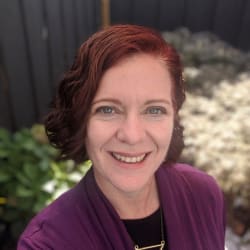
Marieke McCloskey
Director of UX Research
More like this?
Tue, May 24, 3:30 PM UTC
Culture and Process: Team Design and Delivery