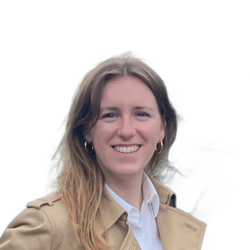
The Human Side of UX Research: Darcie & AJ´s story
Checking session availability…
Hang tight while we load the latest updates.
Behind every product is a person navigating career twists, self-doubt, and the messy reality of making research matter. UX researchers AJ King and Darcie Gomer swap stories about their very different paths into tech, share the highs, lows, and unexpected lessons from studying humans and being human in tech. Expect to hear what it really feels like to build credibility, face self-doubt, and find purpose in the work. Honest, funny, and refreshingly human.
The Human Side of UX Research: Darcie & AJ´s story
AJ King, Darcie Gomer at UXDX Community: London. Video: https://youtu.be/Up1Mjq9ru6k
Readable transcript: edited from the recording's captions for readability (fillers and false starts removed, punctuation and section headings added). Wording is the speaker's own. Timestamps are positions in the video. Names marked [?] could not be verified against the audio.
Cold open and introduction
[00:00:00] AJ: Running back to our car that was parked just around the corner and feeling like we're on a stakeout, and the only time in our lives as UX researchers we'd probably be on a stakeout.
[00:00:14] Host: You're listening to The People Behind the Product, a UX podcast where we talk to product managers, UX researchers, designers and engineers to hear the stories behind what it takes to become or to make a great product in tech. Each episode explores the people, challenges and stories behind the work that shapes the products we all use.
How we met at Ocado
[00:00:38] AJ: Okay, so Darcie, how did we meet?
[00:00:41] Darcie: Well, the first thing I remember is, it was my first day. Was it my first day? Maybe my second or third day at Ocado, actually. I joined Ocado on the graduate scheme and we had those few days, didn't we, of induction, and the emerging talent team were introducing us, and then we had a day that was just for UX introduction and you were running that. I distinctly remember standing in the corridor and I think you kind of came to collect us.
[00:01:22] AJ: That sounds about right, yeah.
[00:01:23] Darcie: And there was all this drama. Someone had been in a car accident and it was like, are you okay? All of that had gone down. So I remember chatting about that, and you were lovely, as always, and made a joke of things that you could make a joke of, to lighten the mood. And then we went and you taught us about Ocado and the crazy structure that we had, or still have, at that company, and how UX works. But that's my main memory of meeting you. What do you remember about meeting me?
[00:02:01] AJ: That sounds pretty accurate. For anyone listening who thinks that I made fun of someone who was in a car accident, they were absolutely fine and we knew this at this point, and I'm sure I didn't make anything of it. I'm a very nice person, you all know that, anyone who knows me. I think my recollection of it is hilarious. You're saying we came to meet you in a corridor, because yes, you had time with the emerging talent team. What a great name for a team. And emerging talent looked after all graduate schemes, not just UX.
[00:02:30] AJ: And I think it was relatively early on that day, so I think I'd got into the office and we were literally sat around upstairs as a team having coffee, waiting for emerging talent to release you into our care, or our custody, I'm not quite sure which is the right phrase for that. And then popped down to meet you all. And I have a recollection I was slightly nervous about your cohort. So we took in graduate cohorts of four people a year, and the previous year, in the interview process you didn't end up seeing everyone, because there were several rounds of how the day worked, weren't there, when you did your assessment centre.
[00:03:07] AJ: And I think with your cohort, I think I'd interviewed maybe one or two of you, but I definitely had not interviewed you, Darcie. And I knew, I think we were already paired up, that I was going to mentor you first, so there was a little bit of trepidation on my front. Were you nervous going in on day one, or were you as cool and confident as you always are?
[00:03:27] Darcie: No, I was definitely a little nervous. It was one of those things where I'd never, this was my first sort of big corporate job. I remember turning up on day one and all of the grads were dressed really smart, and then we looked around at the people running our training and the other people in the office. So where we'd been wearing nice shoes and maybe a blazer, then the next day it was like, cool, jeans, trainers, nice tops, that's all good, we can kind of relax into it a little bit.
[00:03:59] Darcie: So I think there was definitely that sort of want to make a good first impression, but then easing into it as we saw that there was that kind of nice, casual, friendly, we're here to do our jobs and be ourselves kind of tech company vibe, which was quite nice. And being your mentee was great fun, for the next six months. We got to work on loads of stuff, didn't we?
Suits, ties and how we each got into UX
[00:04:30] AJ: Yeah, I guess we can dive onto that. We should start fully at the beginning. Let's do a little bit before we dive into the robots, let's keep the people waiting for the cool stuff. The being too formally dressed chimes with me massively. I had my final interview for Ocado back in mid 2016, which doesn't seem like a long time ago for me, but sounds, when I say it out loud, like a really long time ago.
[00:04:59] AJ: And I ended up with one of those final, final stages, the final stage you didn't expect, and it was with the CTO at the time. That sort of says how much smaller the company was at the time, that I was interviewed by them. And it was an in-person interview, all of them had been in-person interviews. So I got on the train, went up to Hertfordshire, which is where it's based, and I was in full suit and tie. I arrived in our old office and there were probably 200 people on the floor and I was the only person in a suit and a tie.
[00:05:26] AJ: And the first thing the CTO said was, God, I hope we told you not to come in a suit and a tie. And then I didn't know whether to say no one had said anything and make it like the recruitment team hadn't given me all of the info they had, or whether I said, yeah, they told me not to, and I blatantly disregarded their instructions, as the first thing I said to my potential boss's boss's boss, I think, at that point. Wild times. I love it. Darcie, how did you get to UX, to the grad scheme? What led you to that?
[00:05:56] Darcie: Well, on the surface it makes a lot of sense. I did an anthropology degree, so now I'm a UX researcher. There was a lot to my anthropology degree that translates beautifully over. My dissertation, for example, was actually quite similar to running UX research. I was doing one-to-one interviews, sit down, have that sort of set, we've got one hour, I've got a set of questions, we're starting broad, we're going narrow, all of that stuff I sort of had practice of.
[00:06:33] Darcie: But I chose my degree not because I knew what I would do after. I was like, anthropology sounds cool. I always loved, I did a bit of drama in school, I did a bit of science, I really liked that sort of multidisciplinary practice, I suppose. So I was like, I think anthropology covers that. People are interesting, I'll learn about some different cultures, that's fun. So I had literally, I'll get a degree for the sake of a degree, not necessarily a sort of, and then I'll be an accountant, or, I have a career trajectory in front of me.
[00:07:10] Darcie: So I did that. I then avoided leaving uni by taking a job at my college. So uni was collegiate, each college had a sort of mini students' union attached to it, and I worked for that. So for a year, during covid, it was all about how can we make sure that student wellbeing is okay at our college, how can we run events but they're all online, or just in people's houses, that kind of thing. Which was great fun, and more fun than I expected in covid, I suppose.
[00:07:46] Darcie: Then it was like, ah, I'm now out of the comfort of university campus, I probably should think about real world jobs. So that was when I started, okay, I'll look at grad schemes, I'll look at business management, I'll look at generalist schemes, I'll look at marketing, PR. I was sort of following what I'd heard of. I couldn't tell you how many applications I put in. It was 2022, the world was quite open, there were quite a lot of jobs at the time, I was quite lucky in that respect, but I wasn't necessarily getting them, because I was kind of doing them because I need a job, I don't really necessarily care about this particular job.
[00:08:34] Darcie: And it was only because I'd been looking at grad schemes that I stumbled across the Ocado UX grad scheme. And as I started reading the job description I was like, oh, there's some boxes here that, actually, this is what I should do. I think I'm qualified. Which was really odd, because I hadn't felt that way about other applications. And yeah, sort of went through that one.
[00:09:00] Darcie: Hilariously, there was a video interview stage. So they did, you know, your application, your video interview, I suppose they sort of culled a load of people at that point, and then you went on and did an assessment centre. And at the video interview stage, I'd applied to so many jobs that I had forgotten which of the Ocado grad schemes I had applied to.
[00:09:26] AJ: You applied for a different grad scheme as well. Did you apply for two, or just one?
[00:09:29] Darcie: This just demonstrates how little I knew of UX and the realms of UX, because I sort of just wrote down on my little spreadsheet, oh, I've applied to an Ocado grad scheme. And when I saw, I don't know if this reflects well on me, but with the story anyway, when I saw in my emails, your video interview, Ocado UX, I was like, what do those letters mean? Is that just the code? Like, I don't know, certain courses and stuff have a letter and number code to denote the course, and I was like, is that just the code for our year group?
[00:10:09] Darcie: So my video interview was so generic. I was just like, I want to be on a rotational grad scheme in this international business, sounds interesting. And it was only then that I did the video interview, I then got onto the assessment centre and I got sent through a load of stuff like, you need to do this task and tell us how you would, I think it was, how you would redesign the homepage header. Which I had no design experience of, though I took it from a research perspective. But yeah, it was only at that point that I was like, oh, UX, user experience, oh, okay, I should probably read into this. I was really fresh to the whole realm of that kind of career. So yeah, that was my sort of entry point into UX.
[00:11:05] AJ: That's a great entry point into it. I also love, I mean, the acronym makes perfect sense. User starting with U and experience starting with an X, obviously. So it's obviously the right acronym for our craft.
[00:11:13] Darcie: Yeah.
[00:11:15] AJ: Yeah, it always entertains me. I don't know if people outside of the field that you hang out with necessarily remember what you do for a job. Very few people who work outside tech seem to be able to gauge actually what UX is. Even, maybe I'm just bad at explaining it. But my favourite aspect of this is that my mother, whenever she comes up to ask about work when we're chatting, she will pick a random letter and X and look like she's tried really hard but knows that she has no idea which acronym she's going for when she uses my job title. Which I find very endearing. It's quite entertaining. I think it's me, though.
AJ's route in: psychology, a master's and the Edinburgh Fringe
[00:11:51] AJ: Your journey is very similar to mine. I did a degree in something that was highly relevant, in psychology, but didn't necessarily know about what UX was at the time. And looking back, I'm a little bit surprised that the university didn't push UX more as an avenue to go into. I also didn't want to leave the comfort of uni at the end of my bachelor's degree, so I did a master's degree, but I also took on a job at uni, for my sins. I decided to apply to be one of those pastoral support people that lives in a halls of residence.
[00:12:25] AJ: Which some days was great and I got to put the psychology and the counselling type vibe to work, and then most nights it was just, at three in the morning, someone who'd lost their key in a nightclub knocking on my door and asking if I could let them into their room so that they could try and sleep their hangover off before their 9am lecture. So it was a year of fractured sleep. And it was entertaining.
[00:12:52] Darcie: You said you decided, because you left the comfort of uni by having to do this job remotely, that was when you decided to join the real world, as it were?
[00:12:58] AJ: I was all geared up to do a PhD, Darcie. I was all geared up at the end of my master's to do a PhD. This is going to sound terrible. Fully funded PhD with no living expenses behind me, because I had this job on campus. And then at the end of my master's I was pretty burnt out by doing the master's itself, pretty intense.
[00:13:19] AJ: And then I went to the Edinburgh Fringe with a show I'd been to the year before, but I'd been sort of in charge of it the year before, and this year I was very much the director, I was very much running the show. I was trying to finish my master's thesis. There were like 20 of us living in a five bed house in Edinburgh. We were getting up, we were trying to promote our show, we were doing a show in the evening, we were not really sleeping particularly well. It was all excitement and all these sorts of things.
[00:13:45] AJ: Eventually, I think it was that the comfort side of student living had very much worn off and I decided I was maybe a little bit too old for this, even though I was not anywhere near too old for this. And so that was it, I was like, I've got to forge into the world. Applied for loads of jobs at the time, again similar to you, a myriad of different fields, random things.
[00:14:07] AJ: I went through one interview process that a recruiter had booked me for and, I won't lie, I got three interviews into this process and was offered a job and I had literally no idea what I'd be doing at the other end. It had been so vague in what the offering was that I honestly had no idea what it was going to be. And eventually the Ocado thing popped up as a role in behavioural economics, which was my master's, and I thought, this is like the first one of these I've actually seen, I'll apply and go for it. And ended up at Ocado, loved it.
[00:14:38] AJ: Met the head of UX. The head of UX was confused as to why I wasn't a UX researcher, and said, next time there's a vacancy you can come along and interview. Was kind enough to interview me. They sent me a standard research task to do, and the three of them, who I was friends with at the time, we had this very weird moment where we all were chatting outside in the corridor waiting for our room to become free, and then we were all friendly outside and then we walked in and we all assumed our roles, all very serious. You are the interviewer, I'm the interviewee. And it was all very formal and very nerve-wracking for me, who's not serious most of the time.
[00:15:15] AJ: And they sent me this task and they were like, you have ten minutes to work out a research plan in the room. And it took me seven minutes for my brain to click in and remember I knew any research methodologies. I'd walked into that room going, this is fine, I've been doing some form of social science research since I was 17 and started taking psychology at school, this will be fine. They left the room and my brain just went blank. I had an argument with my brain, about seven minutes of the ten minutes we had. So I really thought this wasn't going to work and I was going to fail it. Eventually found some ideas.
[00:15:47] AJ: But I think I said to quite a few of you on the graduate scheme, I'm very grateful that I didn't have to go through the rigmarole of your recruitment graduate scheme, because I don't think we'd be having this conversation if I did. When Darcie says they might have sifted out a few people at that video stage, I think it sifts down from somewhere between three to 400 people down to the 16 or 18 that went to the assessment centre.
[00:16:10] Darcie: Oh wow. I didn't realise I'd got that far. Yeah.
[00:16:16] AJ: So a wild numbered way to get down to that stage. So congratulations.
[00:16:23] Darcie: Thanks very much. What was that transition like for you, from going from being in a role not as a UXer to then being a UXer? Was there anything that you brought over?
Moving into UX, and research before and after lockdown
[00:16:36] AJ: I guess there are a few things I brought over. So I mainly was doing workshop facilitation, team ways of working, team coaching, agile coaching, that sort of stuff in my original role. And so when I came over there was a push of teaching the teams a little bit more about workshops, about facilitation techniques, and kind of broadening horizons outside of standard focus group or decision-making kind of exercises that the UX team had, and teaching them more of that.
[00:17:07] AJ: I had a really nice kind of cut-off point. I ended up securing that job in mid November of 2019, and so rounded off 2019 in one part of Ocado, packed up my box and everything with all my things, had Christmas off, and then came back in in January in a different building, a different desk, with a different team, people I already knew. It was sort of the easiest way to do a transition from completely different careers. And then 12 weeks later we went into lockdown and everyone in the department had to work out how to do the job all over again anyway. So weirdly, because of covid, it was actually quite an easy ride in, because none of us really knew how we were going to do anything, because everything sort of shifted and changed.
[00:17:53] AJ: It's weird, but I think I missed out, due to a conflicting meeting, on the last in-person bit of research that I think they did for the e-commerce side of Ocado. I was meant to be shadowing in that session, because they used to bring people just into the office in Hertfordshire and have a chat with them in one of the meeting rooms there. I missed out on that due to a conflict with another bit of research that was, ironically, remote, and then we obviously went fully remote and I don't think I've gone back, at least on the customer-facing side, to in-person things.
[00:18:31] Darcie: Yeah. I don't think I've ever, I mean, we'll talk a bit about our experiences in research together and since, since you left Ocado and we've not been working together, but I'm in e-commerce now and I don't think I've ever interviewed a participant in person that's a B2C sort of participant. All remote, all online.
[00:18:58] AJ: To be fair, that makes sense, because the bias or the skew we almost certainly had in those days was people who were available during working hours to come close to our office, which largely is in the middle of nowhere outside of London. And there just must have been such a bias of the people we got into that room, who could actually make it to that session to chat to us and do those things. Which now that Ocado offers e-commerce solutions globally means it would make absolutely, I don't think it would make any sense to run a research project that was in person with end customers, because you'd just be missing out on such a vast array of the demographic you need to talk to.
[00:19:43] Darcie: Yeah, that's so true. And I think it's also nice, I mean, we do grocery, so you're kind of talking to people in the context, they're doing their online grocery shopping in their home, or at least they're more likely to be doing it in their home than in some random business's office in Hertfordshire. So you kind of catch them more in context.
[00:20:04] Darcie: I've spoken before to a nurse who's on a break from her shift and she's sat in her car talking to us in an interview. Or we had one the other day, a mum just talking to us as she's walking around the house and she's on her phone and she's like, oh, the kids are in there, sorry, I'm just sorting this out, okay, what was the question? And you kind of get that idea of, ah, this is what your shopping experience is like. I'm getting some rich insight just from the context where we're talking.
[00:20:33] AJ: Yeah, so true.
[00:20:34] Darcie: Yeah, I love that.
[00:20:36] Host: AJ and Darcie are ambassadors for UXDX and regularly host meetups in London. If you're interested in joining in-person community events, please check out uxdx.com/community. You can see all of the events happening around the world. And if you're interested, please consider becoming an ambassador and hosting an event in your city as well. All right, let's get back to the conversation.
What's changed at Ocado since AJ left
[00:20:57] AJ: Well, why don't we, I'd love to hear, let's chat a little bit more about what it looks like at Ocado since I sort of left. Tell me about what's changed, what's new. And then we can finish by reminiscing.
[00:21:12] Darcie: Nice. So I guess I'll start from, well, AJ and I were working together in advanced technology, for context.
[00:21:24] AJ: What a fancy name that is.
[00:21:25] Darcie: Yeah, it was so fancy. But there were some fancy products there. We were working with robotics, and at the time I then became the only researcher in the team. It was all good, I learned a lot, and then there was one designer in the team as well. And we were sort of working across products that didn't necessarily have a user, or you were trying to convince the stakeholder that, yeah, I know you're building an autonomous robot, but someone will have to deal with it, or exist alongside it, so let's talk about those people and do some research with those users. So that was interesting.
[00:22:10] Darcie: But on a personal side, it was a great time for me to sort of, I don't know, buck up, like, right, I am off the grad scheme now, I'm a fully fledged UX researcher, I'm now sort of the one in charge of running this. And building that confidence of, okay, no, I am the expert in the room on this particular craft, or on what we're doing next with this project. So that was kind of a good place to be put, and to stretch me.
[00:22:44] Darcie: I mean, you were talking about covid. It's interesting how sometimes career changes coincide with bigger changes and how that actually can be quite helpful.
[00:23:00] Darcie: We had a big reorg, so the department I was in, advanced tech, then got disbanded. It was sort of spread across lots of different departments in the rest of the company. And it was a time of great tension, panic, people were losing jobs. Everyone's sort of down in the dumps, like, this is not good, the person I've been working with for the last 12 months, or for some people years and years, is now having to leave. And it can be sad, it can be challenging.
[00:23:35] Darcie: But at that point I then got moved into our e-commerce team, and so it meant that, because everyone was kind of back at square one, we're getting new strategy, we're getting new leadership, no one knew what they were doing next. So in the same way that my colleagues in e-commerce, they had a lot of information, they had a lot of research, knowledge about users, they were kind of bringing that forward. So it was a great time for me to learn about what they already knew, because they were teaching others. They were teaching the new leadership what UX research could do, what they already knew about our users.
[00:24:20] Darcie: And then they were also building themselves up again on, what's our research roadmap look like, what are we doing next and why, what are the new goals? And so I could be brought along in those conversations rather than diving into something that was already flowing.
[00:24:42] Darcie: So yeah, and now things have kind of settled. We're like a year on, yeah, about a year on. And it's quite nice. I think this is the first role at Ocado that I've been in for more than, I think my longest one was maybe eight months, ten months in advanced tech, because of the nature of the grad scheme. It was like six months here, six months there, six months another place.
[00:25:07] Darcie: But now it's kind of like, oh, I know who my stakeholders are, I'm building good relationships with them. That part I really enjoy. I like running workshops, we've been doing a lot of those recently. And then building that knowledge base, because I've now run a fair few research projects in the realm of looking at how do people shop online, how do they do it in this market or in this country, and why is it different? And I find that really interesting.
[00:25:39] Darcie: It's an interesting little part of someone's every day, but you kind of pick that apart, and that might be like an hour that someone spends on a Wednesday evening for their shop that comes on a Sunday. But for us it's like, okay, you're one of however many, how can we extrapolate your experience and make it better, and improve that one hour on a Wednesday where you're chasing the kids around but you're just desperately trying to put some potatoes or some bananas on your shop. Yeah, it's quite nice.
[00:26:10] AJ: Love it.
[00:26:11] Darcie: What about you? Oh, sorry.
B2B versus B2C, and leaving Ocado after eight years
[00:26:13] AJ: Oh, I was going to say, it's that difference between the vibe of B2B and B2C research, where B2B is actually a little bit colder in some regards. You're looking for efficiency. It's about making people's lives easier still, but it's also about making their work time more productive, less stressful, less frustrating. Whereas definitely on the B2C side of things you hear that we want to delight users, we need to set ourselves above other experiences that they could be picking. It's a different world. I spent a long time in B2B. It'd be nice to get back to something B2C.
[00:26:51] Darcie: Yeah. So how have things been since? Because I guess we were working B2B together. But yeah, how have things been since?
[00:27:00] AJ: Yes, as sort of intimated, I did the wonderfully chivalrous thing of fighting to get headcount in advanced tech as a department, hired the wonderful Darcie, and then immediately quit. Actually, I think before we'd even finished the interview process, between starting the interview process and ending it for that role for you to roll off the grad scheme, I'd handed my notice in.
[00:27:23] AJ: I'd been at Ocado for eight years, I was comfortable, and that's a really good thing in some regards. It being, realistically, the only company I'd worked at post uni, the only professional experience I had, I think I looked at it and went, if I don't leave now, when someone has turned up and gone, do you fancy this job, and it sounded good and I'd gone through the process and it seemed like a good idea, if I don't jump now it's going to be increasing magnitudes of difficulty to leap later. So I thought, okay, I'm not ready to leave, but that's probably the right time to go, especially after eight years. So yeah, I left June 2024, something like that.
[00:28:04] AJ: And rocked into another company that was doing, again, a similar B2B role, that was kind of trying to build a marketplace up. And it was a really interesting transition, because I'd had a couple of weeks off, but didn't have enough leave to take the full two weeks off. So, not being a particularly egotistical person at all, I took the nine days off I had and came back in for what was my last official day, having handed my laptop in two weeks earlier, and just had a lovely day of having coffee with people like Darcie and having a natter, and sort of rounding off the relationships of people I'd worked with across those few years.
[00:28:47] AJ: Some conference calls with people in other countries, a relatively tearful goodbye with our lovely stakeholders in the Canadian office who felt like really, really close friends even though I'd met them once in person across the 18 months we'd worked together. Which is always a weird aspect of the global company thing.
[00:29:09] AJ: And I started at this new company the following Monday and was not quite ready for how lonely or isolating it was going to be. It was a busy company, there wasn't the time really, and as a senior there wasn't an expectation to do a lot of handholding to get me up to speed, which was understandable. But I just remember sitting at my desk in this new place going, oh no, I don't know anyone, I'm too much of a people person not to know anyone, this is very sad. And I figured it would all sort of calm down, and it did, and I got to make similar sorts of friendships there, which was great and lovely. But the place the company was in and the culture there maybe wasn't the right sort of fit for me.
[00:29:51] AJ: And I spent a really long time trying to work out if it was just the fact that I'd been comfortable at Ocado, and I didn't know what life was like at a different company, and I'd become too used to the good parts and the bad parts at Ocado and that I just thought was how it should be and it was different here. Or whether this actually maybe wasn't the right place for me.
[00:30:11] AJ: Eventually bit the bullet about four months in. So not long, like 16 weeks in, very, very soon in, to start applying for other jobs. Which of course then means you've got a CV that says you've been at one place for an eternity and another place for basically a pit stop on the motorway, and nothing else. And you're trying to explain why you're not going to be a flight risk for them immediately. And that was sobering.
[00:30:39] AJ: I think it led to some really earnest conversations, which the hiring managers appreciated, and just got us down to the nitty-gritty of what I was really looking for and what they were really looking for. And definitely there were a few interview processes I went through at that time where I got the similar sense that it was going to be more like the culture of the place I'd gone to and less like the culture of Ocado.
[00:31:04] AJ: And then actually, wonderfully, I had a first stage interview at UXDX, October last year.
[00:31:12] Darcie: Yeah, when we were in Dublin together last year.
[00:31:14] AJ: Yeah. I flew in, I arrived and I took a stage interview with one of the subsidiary companies of Zoopla. And the vibe was similar, it just felt like having a chat with someone. I went, oh, okay, so there are other companies that are similar and out there that have the same vibe. And that was great. Fortunately managed to get that job and I've been there on a maternity cover contract ever since.
[00:31:40] AJ: And it's been fun. It's been, again, business to business stuff, so working with estate agents, who are wonderful as participants. We spoke to quite heavily technical people who were not necessarily the most vocal in how they explain things, or weren't necessarily the most up for a chat. It's absolutely wonderful, in chatting to an estate agent, when you say, tell me a little bit about yourself, your agency, your journey, as a standard icebreaker to build some rapport at the beginning of a session, I can tick off quite a lot of the questions I want to ask, just on the fact that they know what the session's about because I've told them in advance we're going to be talking about this aspect of the tool.
[00:32:17] AJ: And I will go through my script in the intro section, which will take the first ten minutes of a 30 minute session, and just tick off everything that they've answered, which is amazing. It's a great level of insight, and just a wonderful way to have a natter with people. So yeah, proptech's been really, really cool. And I guess the next time I see you, this contract ends somewhere around the end of November, maybe early next year, so next time we see each other I'll probably be somewhere else again. Who knows?
[00:32:50] Darcie: Yeah. Off where the wind takes you.
[00:32:54] AJ: Yeah, absolutely. Although very keen at this point to put down roots again. It was nice putting down roots. I think we had a good way of working at things with the setup we had at Ocado. So yeah, it's time to put some roots down again.
[00:33:08] Darcie: Yeah, it's nice. It makes a difference having just really good people around you. I think it was nice, because I guess on a grad scheme you move a lot and you somewhat feel uprooted, but you're never actually that far from the people that you met in other parts of the business. So yeah, I agree, it makes a big difference, that culture point.
The grad scheme placements and Code for Life
[00:33:34] AJ: Yeah, you hope to find it wherever you go, I suppose. Although I guess with the way that, Darcie, your grad scheme worked when you first joined, I was technically floating rather than in a particular department. So we spent six months with you shadowing me doing a large amount of floating around, but it was primarily in advanced tech, because that was a point where I was not very subtly trying to just pick up work in that department to secure a permanent position there. And then you went off for six months to work in another area, right? Were they in advanced tech at that point, or did they get absorbed into advanced tech during your placement with them?
[00:34:14] Darcie: Well, I went to e-commerce next.
[00:34:20] AJ: Oh, you went to ecom next. Oh yeah, then your third placement was with Code for Life.
[00:34:25] Darcie: So my third placement, I'm actually not sure where in the business they are.
[00:34:30] AJ: Basically Ocado support a not-for-profit coding game, which is fantastic. Anyone out there that's got kids that want to do some coding, it's called Code for Life and they have this game, Rapid Router.
[00:34:40] Darcie: Yeah, it's really, really cute and it's kind of based around, you're in a van and you're delivering to someone's house. It's very sweet. And they produce so many useful resources and things as well. So I went to their team, and they're a super small team, and got to do some research with some students in schools and stuff like that, and it was really interesting and very cool.
[00:35:07] Darcie: But they're one of those teams within Ocado that don't necessarily have a very obvious home. Ocado do big warehouse robotics and automation, and then they also do an online grocery shopping platform, like a white label platform that people plug into. So this coding game, that was just a really lovely initiative, an impressive initiative that came from some volunteers that then got some funding from the business. So yeah, I think they've sort of been moved around wherever they fit next in whatever organisational structure, and I think it might have changed twice now even since I left them.
[00:35:48] AJ: Yeah, so all sorts. But yeah, I guess you were uprooted from mainly working in advanced tech with me, went to e-commerce, came back to a team that was sort of in advanced tech, and then we just about justified the fact that because you hadn't technically worked with me formally in the robotics space, that was a good excuse for your final placement.
[00:36:09] Darcie: Yeah.
Rough and ready research with robots
[00:36:10] AJ: And so let's reminisce about that in the last few minutes. The time we had working on the most bizarre but wonderful kind of UX research I think I've ever done, into hardware, into robots, into autonomous vehicles. What, for you, can you remember was your introduction into that space? Was it as glamorous as that sounds? Was it not very glamorous?
[00:36:37] Darcie: I think the standout thing, no, it's not as glamorous as it sounds. It sounds like it, I think it's actually quite earthy. It's more like, you say robots and you think glamorous, shiny robots. I think I'm imagining one of those conferences where they've set up and there's lights on it and it's doing its absolute best thing.
[00:37:04] AJ: It's a whole show.
[00:37:06] Darcie: Yeah, it's a whole show. Whereas actually it was us putting boxes together and, this is literally a bare wooden box with a lovely bloke behind it who helped us out on the day, pushing it and pulling it back, and you're like, just imagine that this is all automated and there's no bloke behind the box and it's actually magic technology doing it. How would you find that as an experience?
[00:37:36] Darcie: So in some warehouse in Welwyn Garden City, trying to get insights despite the fact that you've got products that haven't been, what's it called, patented yet. So you can't get external users in, you have to just ask some people that work at the company that maybe don't know enough about these robots, so they can kind of give a bit of an idea.
[00:38:05] Darcie: So yeah, it was definitely rough and ready, but I think that's something I really enjoyed about it. I really liked, I guess in my role now we tend to spread out, like if I'm doing one project I might have two interviews one day, one interview another day. Which is great, it works in our ways of working. But something I think I got a lot from was we would do days where it's like, cool, today we are gathering data, participant one, participant two, participant three, and the whole day is this big collaborative in-person thing. And it's really full on, but it's really good. What were your standout things? Do you resonate with any of those?
[00:38:45] AJ: Yeah, no, I really do, actually. The last point you made, we did some really fun stuff, but it was rough and ready. It was not shiny robotic stuff. It was trying to simulate automated processes when you didn't have the tech that actually did it, so that we didn't get to the stage where, once the tech was in place, we didn't know that it would actually work with users.
[00:39:08] AJ: It resonates with me, doing those full days were intense. I remember, for a fair number of them, and I think this happened and it ended up becoming the habit, because the first one of these we did, the PM freely admitted to me, she said, I did not think this would work but I gave you two days to prove that it would work. She didn't think we would learn anything, and then became our biggest advocate, which was amazing. One of the best product managers I've worked with.
[00:39:35] AJ: And in that first stage we brought people in, and we booked two and a half days out in not even a lab space. Ocado had a games room which had a couple of games consoles in it, a foosball table in it, and a darts board. That was the only large enough space that we could book. And so we moved all the furniture aside and we set up this really makeshift sort of collection point for people to come in and pretend that it was an automated locker service.
[00:40:05] AJ: And we had people booked in for two and a half days, and we did the two days straight through, from starting with participants at 9:00, finishing at 5:00, so in the room saying 8, finishing off with closing things down at 6. No break, no stopping, tag teaming in and out for lunch and grabbing coffees and things. We did that for two and a half days, and post finally stopping and taking a break and having lunch on the third day, we then went, ah, well, we've got the rest of this day, why don't we go and try and find a quiet room somewhere and do the analysis on this?
[00:40:37] AJ: And so we went and we did chop the analysis in that afternoon and had sort of skeletoned an insight stack together by the end of it. But then it became this running thing, that we would build the standard artefacts you do as a UX research team, but because we were there working with the product manager who needed to make the decisions, and a couple of the people from the tech side had come in to most of them as well, actually there wasn't really anyone to present back to. That was the process of making a decision off the basis of the insight.
[00:41:08] AJ: So yeah, there was something really fast and furious but exciting about that kind of rough and ready testing, where in three days you got through all your participants and did your analysis and made decisions, and horribly then had a list of additional questions you needed to answer for the next round of research.
The stakeout
[00:41:24] AJ: I think my favourite that we did is, again, we were wanting people to come and collect groceries when there was no driver around or no people around to help them with a system. And what that looked like, trying to test it out in the field at people's houses, was driving up in a hire car. And we did it a few days, so varying sized hire cars, even though we always tried to hire the same sort of sized SUV to pack all our stuff in. Everything from, I think, a Fiat 500 one time, all the way up to a nine-seater sort of transit van style thing. Great stuff.
[00:41:58] Darcie: Yeah.
[00:41:58] AJ: Driving around the local area, setting up a decorator's table, plonking some grocery bags on, running back to our car that was parked just around the corner, and feeling like we were on a stakeout, and the only time in our lives as UX researchers we'd probably be on a stakeout, to watch how people dealt with these things. That was really fun. Really fun times, really insightful times, but really fun times to just do weird, rough and ready research to learn about things that weren't really in existence yet, so we had to make it up in some way.
[00:42:32] Darcie: Yeah. Just being on a covert operation, trying to hide from this part. Like, I swear there's no people around, and this was like knocking on the window.
[00:42:43] AJ: The second day that I did that with one of our good colleagues, Tal, he turned up with a box of donuts for the dash of the car. And I think his quote was, I've tried to find what I think will be the worst coffee I can in a takeaway cup, so that this really feels like a bad American cop movie stakeout. And it was a very entertaining day with some very bad coffee. I don't know what to tell you. It's just great when your work feels like you're living in a movie.
[00:43:15] Darcie: Yeah.
[00:43:16] AJ: Just living the fantasy. That's the reason for the research, right?
[00:43:21] Darcie: Yeah, 100%.
The people behind the product
[00:43:22] AJ: I guess maybe that's a nice segue to come into a closing point. We've talked a lot about my journey and the culture of where I went not quite being the same. We've had a laugh. We've obviously continued to be kind of friends afterwards, we now run events together for UXDX. This is all meant to be about the people behind what we're doing. What is it about the people we've worked with, Darcie? What is it about the UX and product and dev type people that makes you keep coming back to this as an industry?
[00:44:00] Darcie: I think it is that curiosity and willingness to experiment and play around with things. I think you've got to have people that you can have as much a chat at the pub with, as well as then being able to chat openly about, yeah, that thing we made, it doesn't really work, so are we going to sort that out? Yeah, I think we should. Cool. But we're all in it together, I think. That sort of openness to the honest truth, but being on the same team, is really cool. And then taking that next step and, well, we'll try again, all good. What about you?
[00:44:44] AJ: I love that. Yeah, I think it's similar. I think it's the level of, we're all, especially when we were working on that kind of bleeding edge tech, I think there's just an excitement around the work that we were doing. But I loved that none of us necessarily got too up ourselves, for want of a better phrase, in the fact that we were working on some really, really cool stuff. There was still just that grounded, down to earth, let's do the best thing we can but have fun while we're doing it, because this is fun and it is cool and we should appreciate that it's fun and cool to be in this kind of work. So yeah.
[00:45:19] Darcie: Yeah, I love that. It's all about bad coffee and donuts while you watch people fail to use a system.
[00:45:25] AJ: Because you haven't built it correctly. And then, as you said, Darcie, you go again. You go again.
[00:45:30] Darcie: 100%. And I think that's what's drawn me to UXDX and doing this London ambassador thing, is that belief that all of those people are out there and doing this in other companies. I think that's what's so interesting. I've got to see it, at least, in different contexts across a single company, but hearing about how that kind of mindset is applied and what rough and ready things people are doing in different contexts and different companies is really cool. And I'm grateful to you, AJ, for being the one that came over to me at UXDX and was like, oh, there's openings for the London ambassador role, do you want to do it?
[00:46:10] AJ: Yeah, I think I have vague recollections, maybe I'm romanticising the way that went more, but I think Katherine was on stage announcing that, you know, we have our ambassadors programme, and I think we were stood next to each other in that wonderful place in Dublin. And you went, who's our ambassador? And about 20 minutes earlier I'd turned around to the team and said, hey, I know I'm a bit of a loose cannon, any chance you throw this one in my direction? And they said, yeah, why not, of course, that sounds great. And I think I leant over to you and just went, do you want it to be us, when you'd asked who are the London ambassadors? Like, should it be us? And you were obviously sleep deprived and delirious and about to run for a flight, and said yes. And here we are.
[00:46:58] AJ: And yeah, I love, I think you're right on that side of things. I love that, actually, one of the great things about being inside of Ocado was there were a huge number of UX people and UX researchers, and you sort of get that vibe of community within the company. Going elsewhere and having worked in a couple of companies where the UX teams are smaller, actually having a space like UXDX, where, so I'm the only researcher in the company at the moment, coming along and just having a space to chat to other researchers about what they're doing, is a really valuable thing. So yeah, long may our UXDX London things continue.
[00:47:36] Darcie: Yeah, looking forward to the next one.
[00:47:38] AJ: Amazing. Cheers to that.
[00:47:40] Darcie: Cheers to that indeed. It's been lovely to chat and catch up, AJ. Thanks so much.
[00:47:47] AJ: Thank you.
[00:47:49] Host: Thanks for listening to The People Behind the Product. We hope you enjoyed this episode. If you did, please consider liking and subscribing, it really helps us with the algorithm. If you're interested in learning more, check out uxdx.com/community, where you can find all of our upcoming events as well as our conferences. Thank you and I'll see you at the next one.
Speakers