Remote / Hybrid Working Models of the Future
Checking session availability…
Hang tight while we load the latest updates.
In a hybrid-remote scenario, a subset of the company commutes each day, paired with a subset of the company that works remotely. This scenario offers complexity to managing individuals, teams, office dynamics and the product itself.
In this talk Kay will discuss InnoGames’ culture prior to the pandemic, how it developed when transitioning to remote work, and plans for building a hybrid model using an adaptive approach moving forward. All this to achieve InnoGames’ goal of creating the best working model.
Remote / Hybrid Working Models of the Future
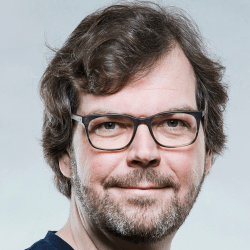
Kay Schnittker at UXDX EMEA. Video: https://youtu.be/h9Qdqt2rXAs
Readable transcript: edited from the recording's captions for readability (fillers and false starts removed, punctuation and section headings added). Wording is the speaker's own. Timestamps are positions in the video. Names marked [?] could not be verified against the audio.
Introduction and InnoGames in numbers
[00:00:00] It's a pleasure for me to talk to you today about the hybrid working model at InnoGames. Before I start, a few words about myself. I'm Kay, and for an unbelievable 12 and a half years I've been working at InnoGames as their director engineering, taking care of the software development that stands behind our successful games, like doing payment, marketing, and everything which deals with data.
[00:00:29] Before joining InnoGames I worked at the Yahoo company Kelkoo as their head of engineering, and I started my career as a software developer in a very old-fashioned company called DAA[?]. Only three steps in my career, but I think it's a very good round trip through different company cultures.
[00:00:54] InnoGames was founded in 2007 in a small town nearby Hamburg. We quickly realized that we couldn't grow as much as we needed and moved on to Hamburg, where our headquarters is still located. From there we are developing seven live games that we have published in more than 30 different language versions. In addition to them we have three games in the app stores currently, that you can check out if you have a minute or two after this talk.
[00:01:29] All these games are developed by a team of more than 400 people out of 30 different nations, and here you can see many of them, from our summer party in 2019, where these crowded gatherings were still possible.
[00:01:50] Today I would like to talk about the following topics. To learn about InnoGames culture and how we work, it is important to know InnoGames before the pandemic. Then I would like to share the insights of how the pandemic has affected us, before taking the conclusion into the hybrid working model. And last but not least I would like to give a short outlook on where we are now.
InnoGames before the pandemic
[00:02:21] So let's start: InnoGames before the pandemic. As I told you, our headquarters is located in Hamburg and all of our 400 people are working in this building, that is guarded by this gigantic five-meter-tall mascot from one of our games, with the lovely name of Paul Paladin. Thanks to the fact that we are occupying the whole office building, we can design it completely to our own needs, that you can for example see in our meeting rooms that have the style of the games we love to play, that inspire us. Here you can see World of Warcraft, or Prince of Persia, or Tomb Raider, just to name three of them.
[00:03:09] On the sixth floor we have a wonderful rooftop terrace with a nice little view over Hamburg, and in front you can see space for sitting together, eating together. In the background we have a nice little cozy lounge area. Our multifunctional area on the ground floor is called town hall, and as you can see there's lots of seating space for having lunch together. Also we have lounge areas for taking a cup of coffee, or later in the evening a glass of wine, a beer, or whatever is fun to be drunk.
[00:03:52] We can do sports in our town hall, playing table tennis, table soccer, and in the background you can see arcade machines, because we are a gaming company, so why not. We have a canteen that we call town hall kitchen, and a wonderful, amazingly good kitchen team that is serving this town hall kitchen. From time to time we are lucky and these cooks are providing us with cooking courses in our event kitchen.
[00:04:25] So you can see that food is really, really important to us. Not just the fruits that you can see here, or in any other kitchen, but also from time to time there are sweets, like our traditional Valentine's donuts. Talking about so much food, sometimes we should work out, and we can do this in our gym, InnoFit.
[00:04:51] We like to party and celebrate as much as we can in our after-work events. Here you can see a picture from a sofa concert, a concert in February 2020, closely before we had to close down the office due to the pandemic. We do any kind of celebrations that are suitable, promotions or onboarding get-togethers. We are greeting every new employee at InnoGames with a cake, so once again, food.
[00:05:24] Home office has always been possible at InnoGames, so it was easily bookable through our HR tool. But I have to admit that we had mandatory in-person meetings, where we thought it is better to meet on site, for all those meetings which affect many people, like retrospective meetings. So home office has always been possible, but not in a streak of five days or even more.
[00:05:58] To sum it up: working from the office is important for our company culture. It is important for onboarding new team members into this company culture. And it is important for social interaction in general, to meet in person, to hold open discussions, and to maintain our team's mood.
The pandemic hits: sending 400 people home
[00:06:25] But then InnoGames has been hit by the pandemic, as the whole world has. On the 12th of March we did a home office dry run. We sent every employee into their home offices to test if it is possible to run a home office with all employees, all 400 employees in their home office. And apart from some itches and glitches it went very well, so we decided one day later to send everybody home.
[00:06:56] We experienced a rather exodus from the company. People came in by their cars, by car sharing cars, by taxis, by whatever, to grab off their office equipment, their monitors, their laptops, their chairs, and get it home. Everything which couldn't be transported on this day has been sent by professional moving companies into our employees' home offices.
[00:07:23] On the 16th of March we introduced a traffic light system and switched the traffic light to red, saying that every employee has been asked to work from home. This red phase lasted for nearly two months, until we were able to slightly loosen the restriction, switching the traffic light to orange and allowing at least a small number of employees to come back to the office: those of our employees who couldn't work from home out of various reasons.
[00:08:00] Home office looked like this. I think you all know this, we have experienced this a lot in the last 18 months. We did meetings in home office and they went fine, through the wonderful support of Slack, Zoom, Teams, or whatever good video streaming tool is out there. Also retrospectives, that we thought back then aren't possible in a home office environment, work very, very well with the support of Miro.
[00:08:30] As I told you, food is very, very important to us, and that's why we have created a food delivery service. First things first, to take the burden off the shoulders of our employees, to take care of cooking for them and their families. And secondly, to support our kitchen team, because in an empty office they would be out of work. Since then we are sending hundreds of meals to over a hundred different employee addresses on a weekly basis, and our employees enjoy it, as well as our employees' children, as you can see in this picture.
[00:09:12] We try to deliver some sort of happiness. Greetings from our town hall kitchen, vouchers, mulled wine spice mix, masks, as they were really, really scarce back then in Germany. We did online events, we played bingo, poker, or whatever was suitable to be played via a video stream, and we had online wine tastings.
[00:09:41] Early summer last year we were able to switch back the traffic light to yellow. It was still suggested to work from home, but we could open up the office for roughly 100 people at the same time, allowing us a feeling of an endless summer, with small team events, with trainings, onboardings, and recruiting in a personal way. Here an impression from one of my teams doing a small team event barbecue on our rooftop terrace, and as you can see, they liked it, meeting each other again after three months in home office.
[00:10:23] But unfortunately this summer wasn't endless as expected, because in September we had to go back into the orange phase, and only one month later we had to switch the traffic light back to the red phase. Every employee was asked to work from home. So we are not talking about an endless summer, but an endless winter, because this red phase lasted for more than seven months. And since May we are waiting for switching the traffic light back to green.
[00:11:00] To sum it up: working from home just works for us. We have achieved all the goals set for 2020, we were able to start three new games, and we had the strongest financial results of all time.
Designing the hybrid working model
[00:11:20] So now we have learned how InnoGames worked before the pandemic and how the pandemic affected us. We thought, what would be the best setup once we go out of the pandemic, and came up with a hybrid working model.
[00:11:40] We started thinking about the hybrid working model in June, when we did a pulse check survey asking our employees how they do. And in general they did quite well, despite the pandemic. We also asked, what percentage of your working time would you like to spend in home office after the pandemic? And they answered a mean of 54 percent of their working time should be spent in home office.
[00:12:09] We did another survey, took part in the Great Place to Work survey, and once again learned that our employees are doing quite well. We invited external guest speakers experienced in remote work or in hybrid work, and took all of these impressions into a C-level and directors offsite that we conducted in November 2020, with a goal to find the best working model for InnoGames' future.
[00:12:41] A working model that enables us to maximize the overall benefits for both employees and the company. That enables us to have a higher performance and more flexibility at the same time. That enables us to overcome some challenges of geographical limitations while recruiting. And that motivates our employees to take part in our company events. This best working model shouldn't stop us from embracing our company values, and it should keep the InnoGames company culture.
[00:13:20] We decided on a test period of 12 months, in which I would like to find out how many days of presence time will we need to maintain our company culture and to keep the efficiency of our teams. We would like to find out which communication tools will suit us best, and what are the best settings for our events. This test period, back then in November, we thought should start in the green phase of the traffic light system, presumably in Q3 2021, so to speak right now. And we have decided that we will accompany this test period with surveys and pulse checks, to generate a lot of data and check how we do.
Free choice of workplace, and required presence time
[00:14:14] We will have a free choice of workplaces. Everyone can choose where to work, a place that enables the employee as well as the team to deliver their best results. This can be the office, the home office, or any other appropriate place.
[00:14:38] We will have a workplace for every employee at any time in the office. That said, we won't reduce the number of workplaces and the number of seats in the office. We will offer fixed and flexible workplaces: a fixed workplace for everyone who is in the office at least once every week, with a chance to keep their personal belongings on their desk, like a personal mug[?], a family photo, or whatever is needed to have a personalized work desk in the office. Everyone else can book a flexible work desk from our internal office tool. At least for the test period we won't do any major changes to the office building.
[00:15:34] We will require some presence time in the office. The whole company will meet four times a year, and our current estimate is that each employee has to be in the office up to 50 days per year. Depending on the role and the interfaces, it can be more than 50 days, can be less than 50 days, depending on the role. But very important to mention, everyone is welcome in the office at any time. Home office or remote work is just an option.
[00:16:12] We will conduct an office week four times a year, with a purpose to have time to meet everyone in person, with a purpose to work together in person, also cross-functional and across departments. We want to have time to celebrate our achievements together. We want to have time for knowledge sharing events and internal conferences and workshops, like our dev talks. And we want to have parties. The attendance to this office week is required. Full participation of everyone at InnoGames is key.
[00:16:58] The timing will be not really on a strictly quarterly basis, but presumably in February, May, September and December, shifting the weeks to avoid having the same week in consecutive years, to avoid hitting personal birthdays, wedding anniversaries or whatever twice in a row.
[00:17:23] In the meantime, between these office weeks, we will have regular monthly after-work events and celebrations. They will be announced early on, to let our employees plan accordingly. It will take place on different work days every month, to give everyone the possibility to join. Catering and entertainment will be organized by InnoGames. We will do pub quizzes, live music events, country introductions. We will celebrate promotions, work anniversaries and onboarding get-togethers, and whatever you can think of which makes fun in an after-work event.
[00:18:07] We will also have team building events, one offsite meeting per team and per year at least. Additionally each team can come into the office for an on-site meeting, and we will have team building events like you can see in this picture from one of my team's team events, where we played bubble soccer. With the hybrid working model we have the vision of, let us shape the best work setup together.
Where we are now: the team days
[00:18:43] So where are we now? Let me introduce you to the team days approach. First things first, we once again did, in May this year, another pulse check, and once again asked our employees how do you do. And luckily, once again they replied that they are doing quite well in general. We also once again asked the question, what percentage of your working time would you like to spend in home office after the pandemic? And the mean even slightly increased, from 54 percent last year to [?] percent this year. On the same hand, a lot of employees answered that they would like to spend some time in the office, showing us that we are on the right track with our hybrid working model.
[00:19:40] The hybrid working model timeline, back then in November when we planned it, foresaw that we will start it in the green phase, presumably in Q3 2021. We wanted to kick it off with our first office week beginning of September, and the second office week in December. Unfortunately we couldn't switch the traffic light back to green, because the pandemic is still there.
[00:20:13] But there is a major difference between our plans last year in November and now, because there is a vaccine available. We reached out to our employees and asked, how many of you will be vaccinated by beginning of September? And thanks to the fact that our InnoGames company doctor offered a vaccination for all of our employees, the vaccination rate is quite high. By beginning of September, 84 percent of our employees were fully vaccinated and another seven percent were partially vaccinated.
[00:20:52] So this meant we might be able to start our first office week. But we thought a full-blown office week with 400 people in the same office building at the same time, after one and a half years for at least some of us spending in isolation, might be a little bit too scary, and we came up with a scaled down approach of the team days. We scaled down to a maximum of 150 people in the office at the same time, by reducing the attendance per team to only two days rather than being in the office for five days.
[00:21:34] We had a strict hygiene concept to make it safe. We provided daily COVID tests and required them, also temperature scans for every participant. No matter the fact if they are vaccinated or not, everyone had to be tested. We asked for a social distance of 1.5 meters, and whenever this could not be guaranteed, wearing an FFP2 mask. We installed air filters in all offices and in all meeting rooms, and we created extra space in tents outside of the office building.
[00:22:11] We wanted to have time to meet one's team in person after so long. We wanted to have time for team building activities, because we had a lot of new employees that never saw their team before. And we wanted to have time to get together with others. This is a draft schedule with lots of free breakfast, free lunch and free barbecue get-togethers, for meeting across team borders, across departments. And in the meantime, which is not filled, this was for the teams to make use of for team building or whatever they needed after 18 months of being in home office.
[00:22:54] Here are some impressions from the team days. Here you can see our entrance area in one of the tents. Here an additional pickup station for food, for lunch, to not have it overcrowded in our town hall. And you can see that our employees liked it, so you can see the slight smiles on their faces. Even if they wear a mask, you can see them smiling. And you can see our town hall was crowded again. Although we paid attention to having 1.5 meters distance, we could meet in a bigger group again.
[00:23:36] Hybrid working model: so we are finally there. We have decided, with successful team days, to switch the traffic light to green. And although we have gathered only a limited experience with a hybrid working model yet, it's just one month yet, it works very well, and the office becomes more and more lively. So we have started to shape the best work setup together.
[00:24:07] And now I'm really curious, getting your feedback, hearing from you, maybe how will your post-pandemic work model look like. That said, thank you very much for spending your time with me, thank you for listening, and have a good evening.
Speaker