Move From Optimization Trap To Continuous Product Discovery
Checking session availability…
Hang tight while we load the latest updates.
Nowadays we talk a lot about innovations, and it looks that it is everywhere. Especially in startups, it is taken for granted.
The reality is startups, just like large companies, very quickly fall into the optimization trap, thinking our future growth will come from optimizing their existing Product.
In this talk, we will see real business cases of good and bad product innovation. Using actual products that have succeeded and that have failed, we will go through the processes we have built to make Product Discovery at Ontruck. You will be able to adapt it and start or improve Product Discovery at your company.
Come to create your innovation processes and "Move from optimization trap to continuous Product Discovery."
Move From Optimization Trap To Continuous Product Discovery
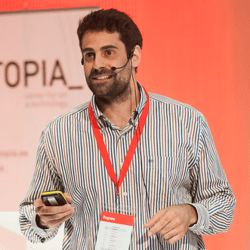
Ramón Andrío at UXDX Community: Spain. Video: https://youtu.be/9wKV_Q4ws8M
Readable transcript: edited from the recording's captions for readability (fillers and false starts removed, punctuation and section headings added). Wording is the speaker's own. Timestamps are positions in the video. Names marked [?] could not be verified against the audio.
Microsoft and the case for many products
[00:00:04] During the last 20 years, only one company has been among the top six companies by market capitalization in the world [?]. This company is Microsoft. They have been among the top stock companies for 20 years, and to do so what they have done is a lot of killer products. Let's see some examples: Windows XP, Office 365, Outlook, Xbox, Minecraft, Windows Server, Visual Studio, Bing, Microsoft Office, Microsoft Teams [?], and even more products.
[00:00:47] You can see they do personal computers, they do professional services, video games, or even a search engine or images [?]. This strategy of doing more than one product helped them to grow from 28 million of annual revenue to 125 million of revenue, growing year after year, all the years. But this is not just luck, like they found these 10 super killer products. What they have done is a lot, and with a lot I mean a lot. They terminated in this time 302 products. You have here the distribution between the different categories.
[00:01:48] With this philosophy, each of these products has brought some revenue, and over time they have changed. This is something that we should all do in our companies. We can't focus on one product, but we should do more.
Ontruck and what we sell
[00:02:04] I'm the director of product at Ontruck, and I'm going to show you how to do discovery like we are doing at Ontruck, and how to link the whole discovery with the revenue of the company. Ontruck is a journey that started more or less four years ago, to put in contact people or companies that want to move goods with transport, or carriers that have space in their trucks. We operate in Madrid, Barcelona, Paris, London, and all online. We have a web app where the shippers can place orders, and we have a mobile app where the drivers receive the orders.
[00:03:05] This whole online supply chain is not the usual in the industry, but freight transportation is huge, so we are very competitive in regional shipments [?]. We do the same everywhere, in Madrid or Paris. We only move things if they are on a pallet. This way it's easier to standardize, to know how many of them fit in a truck, to keep a price, and to know what truck you need, because transportation is very complex.
[00:03:56] Also, we focus a lot on spot. It means that usually in the industry, to reach an agreement with a carrier you need to commit to do several orders. With us, if you have one single order today and we know nothing about you, in three weeks it's still relevant and it's good for us. And also we do same day and next day. It means that in two hours we can put a truck at your pickup, which is very competitive in the industry.
[00:04:28] In this area we know our users and our business quite well. We know what to offer to them. We offer immediate and dynamic pricing. You see, if you are in a rush and you need a truck in two hours, having a price instantly is very important. Usually to get a price, what you have to do in logistics is to call the carrier or send an email, and then you get an email back, or you call him and they say, "Okay, I'm going to check," and then they call you again. It takes time. We do prices instantly.
[00:05:05] We track all of the orders. We have the app on all the drivers' phones, having the tracking in the mobile, so we know when they are going to the pickup, when they are going to the drop-off, and where they are. That is very important, because if you're moving goods regionally, within a city, the journey will be below two hours, or one hour and a half. So if we are going to be late by 10 minutes, it could mean a lot, and you can get stuck in a traffic jam. A lot of things can happen in a city, so it's important for this.
[00:05:39] And also we route the orders. We do routing, both automatic and manual, because it's business, and this way we increase the margin. Logistics is a low margin industry, and with this we try to grow the margin. We put together some orders from different shippers and we assign them to one carrier as a single order.
The optimization trap
[00:06:12] But this is our old product. What is happening in the company is not exactly this. We have immediate and dynamic pricing, and our sales team is also selling contracts. Contracts are something where they go to the shipper and reach an agreement: "I'm going to do this amount of orders per week, and the price is going to be this price." It's a static price, so the dynamic pricing is useless in this case.
[00:06:47] Also, we do tracking on all the orders, but we are selling collection and distribution. If you want to work with groceries or supermarkets, what they usually have is a warehouse close to a city. You do the pickup in the warehouse and then the truck goes to all the supermarkets close to it, doing the distribution. Since the people in the supermarket don't have access to the app, the tracking is useless. Nobody is using it there.
[00:07:19] And we have routing, as I mentioned, but we are selling also dedicated, because dedicated vehicles are something cheaper. They want a vehicle for all the day, let's say a trailer, and they are going to do whatever they want with the trailer. We cannot route it, and we cannot make margin with this product.
[00:07:40] So we were optimizing our product, but the company needed new products to grow the revenue, because what sales was trying to do with these new offerings was bring more revenue, and we were not helping them. It's something that usually happens in startups. The first product of a startup is an innovation. You go from zero to one. But then it is rarely enough to carry them from seed to IPO. You have to innovate several times, and you can do it with product, but startups often forget how to do it after the first success.
[00:08:22] This is what happened. What you can see, even at, let's say, the old startups: you see Amazon and the net revenue. You can see the blue part is the online store, Amazon's core business, and it's growing. But on top of it they are putting more products. They are putting in more services, they are putting in subscriptions like Amazon Prime, or physical stores like Whole Foods. So they are having more types of products in their offering.
[00:08:59] Adding new products brings new revenue, but it doesn't mean that you have to forget about your core product. As you see, it is growing. It's about working on more.
Putting a name on product discovery
[00:09:12] So we decided to start to do product discovery at Ontruck. For us, it was useful to put a name on it, because then we can tell the company, "We are doing product discovery. If you are going to start a new service, if you're going to sell collection and distribution, let us know. We can do product discovery." With a name, they start to know, and we can make the space.
[00:09:41] Also, looking at ourselves, and seeing what we did at the beginning for the first innovation and all the times that we have tried, we found steps that we could follow. So we not only have a name to say, "Hey, we are going to do product discovery," but also we can let the company know what to expect. It's not like, "I'm going to sell a new contract," and here are the product people to do product discovery, and it's going to take forever. No: this is the step, this is the next step, and this is what you get. So you can know what to expect, and you can talk with your clients.
[00:10:23] But before going through the steps, some considerations about discovery. Product discovery should be used when the product should reach product-market fit. We use it only when the goal is product-market fit. Otherwise it's useless. I mean, if you are doing something to help customer service or sales to do something inside your organization, they don't need product-market fit, because they don't have an option. They cannot say, "Hey, I'm not going to use your tool." So this is not discovery. It's a build, and probably a very important one to build.
[00:11:04] And if you are doing discovery, you want to reach product-market fit, and probably you need to measure, "Hey, am I reaching product-market fit?" I have to say that it's very hard to know and it's very hard to measure, but you need goals to say, "Did I reach product-market fit, or didn't I?" And as I say, having new products is about bringing new revenue to the company, so revenue is a good metric to measure it. And if you can't use revenue, you can use the number of clients.
[00:11:36] The goal of discovery is to understand the customers and develop something that fits their needs perfectly. You have to understand the customers and the market, and build something around it, and you have time to do it and to test it. And it is a funnel. Innovation is a funnel. So it's also a process to terminate something if you feel that it's not going to work. If it looks like we don't have a way to enter the market, you can terminate it. If it looks like we cannot delight customers, okay, it's a good time to terminate. Remember, to build nothing is way cheaper than to invest in building something that at the end adds no value, or even reduces your margin, or gives your users friction.
Exploration: long-haul international
[00:12:33] So let's go with the steps. The first step is exploration. It's about understanding the situation from the perspective of the users and also the market. It means a lot of interviews with users that are your clients, and also users that are not your clients. And to understand the market, you could do market research yourself, you can buy a market analysis, or you can do interviews with experts. You need to gather as much information as you can to be an expert in the field.
[00:13:15] So you can answer: if we enter this market, can we capture it? How much are we going to capture? Is it something where we have to start from somewhere, or are we going to create this market?
[00:13:29] Let's see an example. We decided to start to do long-haul international. As I say, we are doing regional, but we wanted to do more products, and one potential was moving goods, let's say, from Madrid to Paris. We saw that some of our clients were doing it already, and they want to have just one provider, one provider that does everything. So it's a good place to enter the market. Also, we have people in the company with the knowledge, because they have done it in the past.
[00:14:17] Doing the analysis, we learned that the ticket is huge compared with the regional ticket, but it also has low margin [?], so we can try to increase the margin as we have done with regional. And also we understood that our best position is in doing export from Spain to France and Germany, mainly vegetables and fruits from the Mediterranean corridor [?] to these countries, and also doing import from all of Europe to Spain, because after going to Europe with the vegetables, the carriers want to come back to Spain with a load again.
Value proposition
[00:15:03] So we have a position, we have a market we can enter, and then we need to build a value proposition. What are the key points we can offer to delight the users, so they are going to buy from us and not from any competitor or another provider in long haul? What we discovered is that they also want price and commitment. They want it fast, as in regional, but they have more time.
[00:15:31] What they were doing is, "Okay, I have to do this order," so they send it to some providers, and the first provider answering is who is going to get the deal. And we learned that they take two hours or more to answer. So if you answer in less than two hours, for the shippers that's awesome.
[00:15:54] Also, we learned that the shippers need proactive communication going into the warehouse. They need to know if you're going to be on time or not to arrive, so be very proactive. But once you leave the warehouse with the goods, they don't care. I mean, they assume that you are going to reach the client, and since it is a journey of two to three days, it doesn't matter if you are, let's say, two hours late.
[00:16:28] And also they have peaks during the year, and they need to be able to show their service in the peaks. An example is something super easy: a company that makes beer, and in the summer they have a peak. What they want in the peak is dependability, so they don't have to look for another provider, while they focus mainly on what they produce, which is beer. In the peak season they want to be super focused on their core activity.
Proof of concept: manual work to learn
[00:17:09] After this, we have a value proposition, and you have to test it. We have the proof of concept. It is a lot of manual work, with product, tech and business together, to learn as much as possible. This phase is about learning, so you have to do a lot of manual work. And it's really good if you can involve, let's say, people like designers, but also developers, because they are going to learn what to do, and they're going to have ideas for later directly from the field.
[00:17:46] But the target is not to create something to scale. It's just to prove the hypothesis you have with the value proposition. For example, you don't have to build a proper product yet. To provide a price in two hours, we built a pricing tool which was a Google Sheet and a Slack channel [?]. In a Slack channel we talked about the price, and also in the channel I can talk with the shipper.
[00:18:21] Also, we had to solve some operational issues with our system. We started to use Airtable and Typeform to ask the carriers for some documents. And since we wanted to be super proactive at the pickup, as I say, we used calls and emails, and we were doing it by ourselves. So you talk with them immediately and you know the reaction. You know if you are calling too much or too little, if they are happy, and what they like.
[00:19:04] With this, we also did a catch-up with the team every week to review the growth, which this is mainly about, and the issues. So we know if we can solve the issues or not, because maybe there are issues that we will never be able to solve. That's also a time to terminate it, or those issues imply that our value proposition is not the correct value proposition, and it's time to change it.
MVP: testing business viability
[00:19:30] After this, when you prove the value proposition, you can move to MVP. MVP is what we call the phase where we try to test business viability. So we not only delight our customers, but reach profitability by doing so. As an example, we were doing collection and distribution, and our shippers were super happy with it. They were saying it's amazing to work with us on this. But we never reached positive margin. So we were super happy, but we were losing money. You have to consider this.
[00:20:12] And also you start to invest more in this phase. For long haul, we have started to adapt our existing tools. Instead of using Airtable and Typeform, we have started to put these documents and this process in our own tools. We also created a new tool for quoting. We were doing quotes from Slack, but it's not enough, and it's not good for sales if you are going to show it.
[00:20:51] And it's not only product and tech that invest. Also the business starts investing, if the value proposition is working. So we hired some specialists in this field, people who know how to move goods internationally in Europe. You need some specialists in the field, and we hired some of them. And we added in the weekly review [?] not only the growth and the issues but the margin, because now we want to make it profitable. So we started modeling.
[00:21:25] And I have to say that it is working. We started like 10 months ago, we still maintain it, and we are thinking of opening more lanes, and we have reached [?]...
The steps again, and Apple
[00:21:45] So let's go through the steps again. Exploration, to understand the clients and the market. Value proposition, to set a statement for the customers. Proof of concept, a lot of manual work to test this value proposition. And MVP, to reach business viability and to know if you can make it profitable. And remember, it is a funnel. In each step you can decide to terminate the product, and if you have to terminate it, the earlier the better.
[00:22:15] We are talking about discovery, so you may think that we were not talking about [?]... As you see, you can imagine the ability to do product discovery. Of course, I'm going to talk about the last years at Apple, where the discovery may be in a way we didn't realize. The blue, red and yellow areas are the Mac, the iPad and the iPhone. Normally we associate those with Apple, but as you see, what is growing is the green one, which is the services.
[00:23:02] We are talking about Apple Music, the App Store, the Mac store, iCloud, iTunes, Apple Books, Apple Pay, Apple Care, and more services around them. And we see also that the revenue of the core product is decreasing, but they are maintaining the overall net revenue. So you can also use product discovery to foresee if some of your products are going to start to decrease in terms of revenue or users, and start to add more products on top, so you maintain your overall revenue. Product discovery is about delighting customers and adding value to your customers, but also bringing revenue to the company.
Conclusion
[00:23:52] So in conclusion: innovate several times to scale. Do not fall in love with your first product and get stuck on it. Evaluate whether in the company people are selling different things, because then you have a misalignment, and maybe there is an opportunity there, or maybe you have to be doing discovery there [?]. Create a space to do discovery. As I say, for us what works is to put a name on the process, so people know what to expect from you.
[00:24:28] And again, the more you explore, the more options for success. Remember that to build this portfolio of products, Microsoft had to terminate 300 products. You have to try way more things than the things you have in your portfolio. Thanks for listening, and here is my email if you have any questions or comments.
Speaker